
Families arriving in Jakarta with young children face an unusually wide set of early years options: British EYFS, IB PYP Early Years, Montessori, Reggio-inspired, and hybrid play-based models, often within the same neighbourhood. The variety is useful; the challenge is knowing what the labels mean, and what matters more than the label itself.
The British Early Years Foundation Stage (EYFS)
EYFS is one of the most widely adopted early childhood frameworks globally. It is not simply a curriculum: it is part of a larger ecosystem of teacher training, safeguarding standards, quality assurance, and assessment frameworks refined over decades in the UK. EYFS provides clear developmental milestones across communication, personal and social development, early literacy, numeracy, and physical development. For relocating families, it has a practical advantage: a child stepping into a new EYFS school mid-year will find the structure immediately familiar.
IB PYP, Montessori, and Reggio-Inspired Options
The IB PYP Early Years is exploratory and open. Teachers plan learning around broad conceptual themes such as "Who We Are" or "How the World Works," encouraging children to inquire and collaborate. It develops curiosity and communication well, though the quality of early literacy instruction depends more on the individual school than on the framework itself.
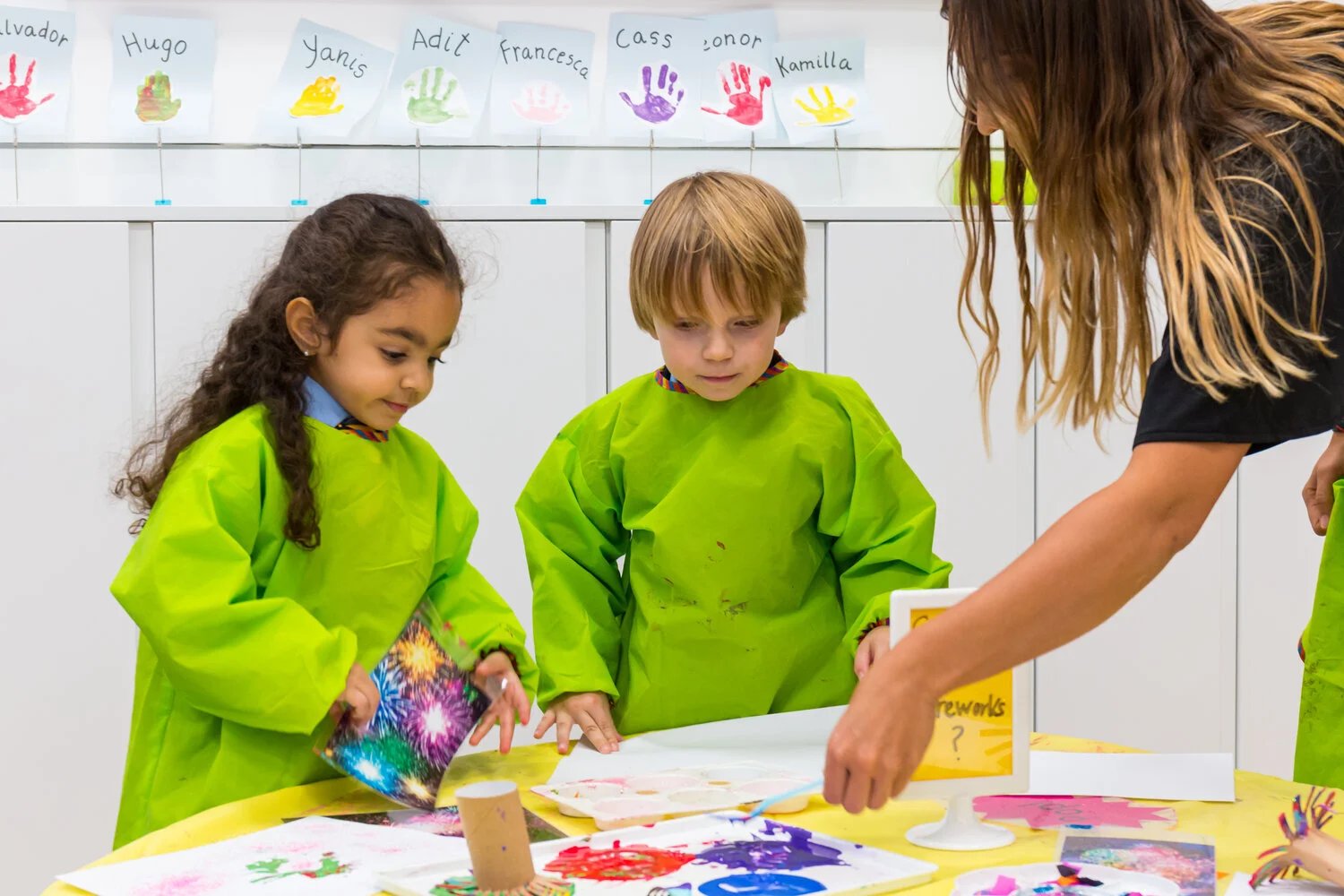
Authentic Montessori requires specialised training and carefully sequenced materials. Done properly, it produces calm classrooms and impressive independence. Reggio-inspired settings prioritise creativity, visual arts, and long-term project work. Done authentically, Reggio requires significant staffing and sustained documentation practice.
In Jakarta, most settings labelled "Montessori" or "Reggio-inspired" are interpretations, not replicas. A "Montessori" class may use sensorial materials while also running teacher-led phonics. A "Reggio-inspired" nursery may embrace open-ended art but follow a schedule Reggio Emilia would not recognise. The right question is not whether the setting is philosophically pure. It is whether the programme is coherent, intentional, and professionally executed.
Teacher Quality: The Defining Variable
Strong programmes employ educators trained in child development, behaviour guidance, safeguarding, and early literacy. Ratios of roughly 1:4 or 1:5 for two-year-olds, rising gently for older groups, allow teachers to manage emotional regulation, transitions, and language needs effectively. Jakarta's international schools vary considerably on ratios. Always ask directly.
Jakarta's early years cohorts are multilingual. Skilled teachers scaffold English through gestures, modelling, visuals, and daily routines while respecting home languages. A setting that treats multilingualism as a complication is worth examining carefully.
What to Look For on a School Tour
Two minutes of quiet observation during a visit tells you more than a brochure. Look for warm, respectful adult-child interactions: how teachers speak to children when something goes wrong reveals as much as any structured activity. Look for children who appear absorbed rather than restless. Check whether transitions between activities are calm and unflustered. Notice whether children do things for themselves: pouring, tidying, choosing their own materials.
High-quality settings demonstrate intentional early literacy and numeracy teaching regardless of programme label. Phonological awareness woven into songs and stories, number concepts built into games, and early writing emerging from purposeful play are the markers. Worksheets are not the measure. Structure is.
For the framework in detail, see EYFS explained.
Most families choose the early years setting and the school in one decision, since the strongest programmes sit inside all-through schools.
Common Questions
Does the curriculum label (EYFS, PYP, Montessori, Reggio) matter as much as schools suggest?
Not nearly as much as parents think. Most Montessori and Reggio-inspired settings in Jakarta are hybrids shaped by staff training and school culture. Quality comes from professional teachers, clear routines, and coherent planning.
Is EYFS different from other frameworks?
Yes. EYFS sits within a well-developed UK ecosystem of teacher training, safeguarding standards, and structured assessments. Even abroad, this produces consistent quality when delivered by trained practitioners. Children moving between EYFS schools mid-year find the structure immediately familiar.
How do I know if a setting introduces literacy and numeracy properly?
Look for phonics woven into songs and stories, number concepts introduced through games, and early writing that emerges from purposeful play. Worksheets are not the measure. Intentional teaching is.
My child is bilingual. Will they struggle?
Most children in Jakarta's early years settings are multilingual. Skilled teachers scaffold English with visuals, gestures, and modelling while respecting home languages. Bilingualism is an asset, not a complication.
How long do young children take to settle?
Most children take one to two weeks to feel secure, depending on temperament and previous experience. Settings with strong routines and attentive staff help children settle more quickly.
What should I look for during a school visit?
Observe how teachers speak to children, how calmly routines flow, the balance between free play and guided activity, and the quality of materials and outdoor space. The atmosphere tells you more than any brochure.
Are hybrid Montessori or Reggio models as good as pure implementations?
In many cases, yes. A well-executed hybrid can offer creativity and independence while maintaining clear structure. The key is coherence: do the staff know why they do what they do?
Is play-based learning academically rigorous enough?
In good settings, yes. Play-based does not mean aimless. High-quality programmes plan deliberately for language development, numeracy, social skills, and fine motor development.
What staff-to-child ratios should I expect?
Roughly 1:4 or 1:5 for two-year-olds, rising slightly for older groups. These ratios allow teachers to manage emotional regulation, toileting, transitions, and early language needs. Always ask schools directly.
What matters most when choosing an early years programme?
Teacher professionalism, emotional warmth, and consistency of routine. Curriculum labels are secondary.