

After-school activities in Jakarta do not organise themselves the way they do in most cities. There is no park to wander to at 3pm, no reasonable walk home, and no informal kick-about that stays on until dusk. The heat, the traffic, and the scarcity of walkable public space mean that every hour between school finishing and dinner requires a plan. For families new to South Jakarta, the range of options can look overwhelming. For families who have been here a year, the pattern is clearer: a structured activity early in the afternoon, academic consolidation while roads are at their worst, and time at home once congestion eases. Getting to that pattern takes longer than most families expect.
The 3pm to 6pm Window
In many capital cities, children walk home at 3pm or catch a bus. Jakarta offers neither. Schools in South Jakarta tend to finish between 2:30pm and 3:30pm, at which point the roads are already beginning to build toward the evening peak. Heat makes outdoor play impractical for anything beyond a short burst. The city's footpaths, where they exist at all, are not designed for children to walk independently. The upshot is that after-school time is a logistics problem before it is an activity question.
Traffic is the defining constraint. A 5km journey within South Jakarta — Pondok Indah to Kemang, or Cilandak to Cipete — varies dramatically depending on when you set off. The same trip that takes under twenty minutes at 2pm typically more than doubles by 5pm. This is not theoretical; it is what determines whether a 4:30pm football session in another neighbourhood is realistic or simply lost in traffic.
The Three-Phase Afternoon
What most families eventually arrive at is a realistic division of the block. It is not imposed by schools or parenting philosophies; it evolves from experience. Families who try to fit two activities on opposite sides of the city, or who leave academic work until late evening, typically find the arrangement unworkable within a term.
- 3:00pm to 4:30pm — structured activity. One coached session while roads are still moving. Either on campus or within a 10-minute drive. Energy is highest, the body needs movement after a school day, and the session ends before peak congestion sets in.
- 4:30pm to 6:00pm — quiet hour at home. Homework, reading, instrument practice, or screen time depending on age. This is the hour the city is most hostile to movement, and the hour children are most receptive to low-stimulation tasks. Pushing through traffic to a second activity in this slot is usually counterproductive.
- 6:00pm onwards — family time. Dinner, conversation, free play, bedtime routine. Roads have eased enough that a swim, a walk in the compound, or a short drive for ice cream becomes possible again.
After-School Activities in South Jakarta
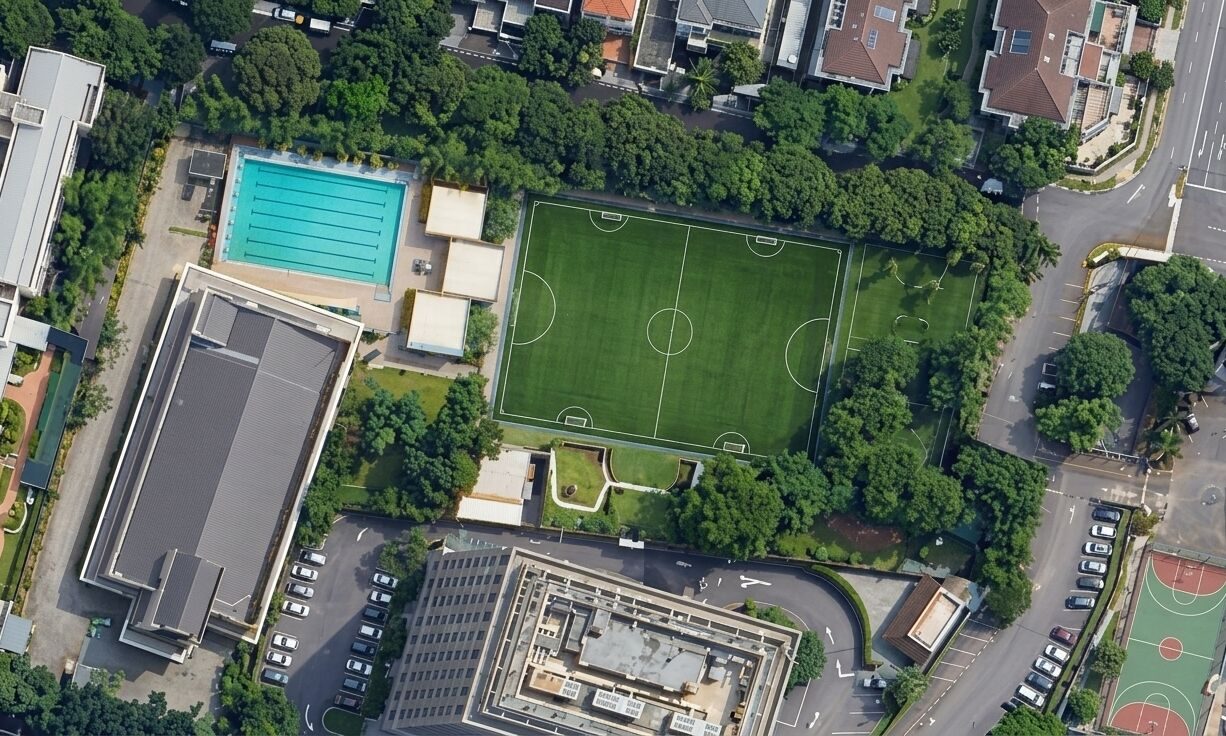
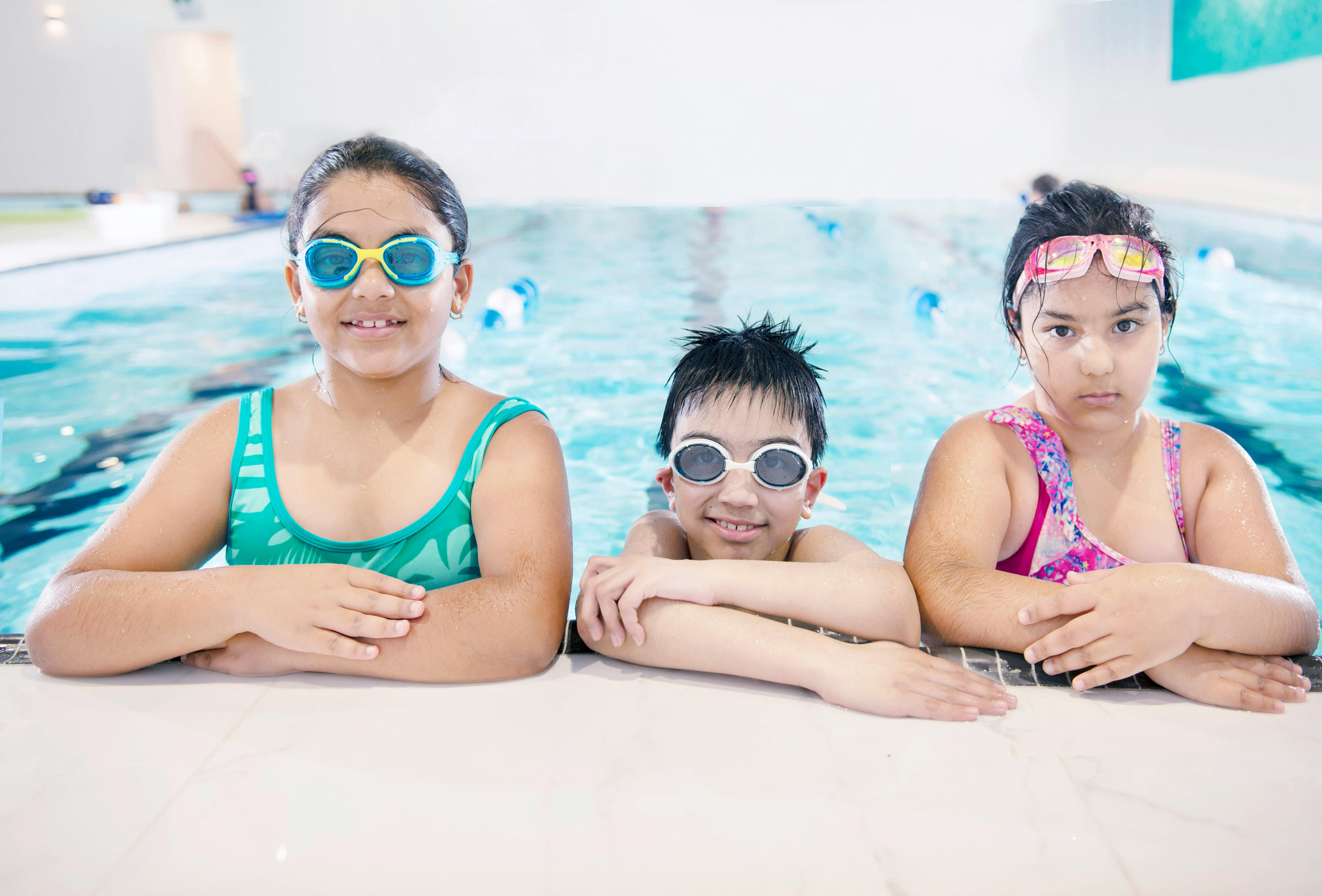
The concentration of international families in Pondok Indah, Cipete, Cilandak, and Kemang has produced an unusually dense ecosystem for a single district. Sport is the backbone. Jakarta's climate pushes most physical activity indoors or into shaded complexes, so swimming, football, badminton, gymnastics, and dance tend to be structured coaching sessions in pools, covered pitches, and air-conditioned halls rather than casual games. Swimming lanes at local clubs fill between 3pm and 5pm; football programmes run on artificial turf that handles rain and heat consistently. Specialist providers such as JustSwim (coaches travelling between Kemang and Pondok Indah), ASIOP Football Academy in South Jakarta, and the French Football Academy serve the bulk of demand.
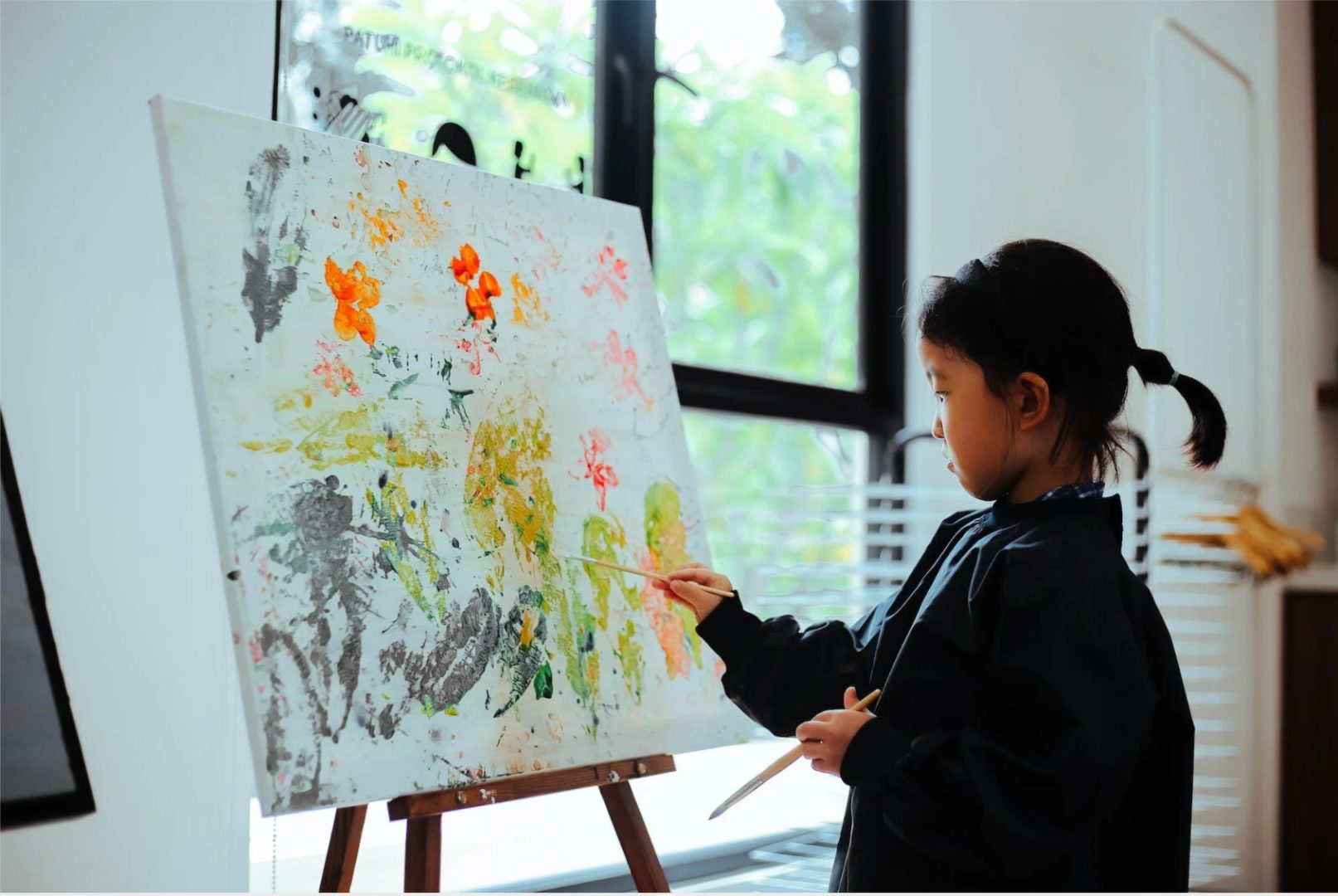
Creative and performing arts occupy a substantial slice of the landscape. Drama studios, dance schools covering ballet and K-Pop, and visual arts workshops are spread across Kemang and Cipete. GIGI Art of Dance in Pondok Indah runs more than thirty-five classes a week; Sumber Cipta Ballet in Pondok Pinang is the oldest Russian-method ballet school in the city; Yamaha, Purwa Caraka, and Resonanz cover most of the music-school demand from age four upward. These providers serve highly mobile communities: children who may be in Jakarta for two years but still need continuity in music or theatre. Provision is better than most families expect before they arrive, though quality varies and some studios have long waiting lists.
Academic enrichment forms the third pillar. Some families use external tutoring centres for specific subjects — Kumon for maths and reading, Mandarin or Bahasa home tutors from around IDR 125,000 per hour — but for primary-age children the more sustainable option is usually in-school. Reading clubs, STEM sessions, coding, debating, and structured prep are increasingly built into co-curricular programmes at British-curriculum schools. This avoids additional travel and keeps academic consolidation predictable, which matters more than the content of any individual session. Research on co-curricular participation consistently finds that the quality and continuity of engagement matter more than the number of activities a child is enrolled in.
Location Shapes What Is Possible
Pondok Indah benefits from large indoor sports complexes and relatively stable roads, which makes reaching activities without crossing major choke points feasible for families in that corridor. Cipete and Cilandak offer a denser network of smaller studios: ballet, pottery, robotics, and language classes tucked into residential streets. Kemang is the hub for creative arts, climbing gyms, and early-years workshops, but its narrow roads require strict timing. Arriving five minutes late on a Friday afternoon can add twenty minutes to the journey home.
For families living outside these neighbourhoods, the calculation shifts considerably. A 3pm lesson in Kemang is manageable for families nearby but impractical for those crossing Antasari from the north or west. Traffic patterns, not catalogues of offerings, determine what is realistically possible. This is worth establishing before committing to a term-long subscription.
| Neighbourhood | Strongest in | Representative providers | What to watch for |
|---|---|---|---|
| Pondok Indah | Indoor sport, swimming, dance, family sports clubs | ISCI, Pondok Indah Waterpark, GIGI Art of Dance, JustSwim, ISJ campus | Lane and class slots between 3pm and 5pm fill a term in advance |
| Kemang | Creative arts, climbing, early-years workshops | Kemang Dance Center, Indoclimb Lippo Mall, Yamaha and Ensiklomusika on Kemang Timur, Nika Gymnastics | Narrow roads compound any late-afternoon delay; budget for the return leg |
| Cipete & Cilandak | Smaller studios — ballet, music, robotics, languages | Sumber Cipta Ballet (Pondok Pinang), MUSIC TEMPLE (Cipete Selatan), RoboThink at Epicentrum Walk, language tutors | Residential streets, limited parking, walk-in capacity often constrained |
| Across the corridor | Specialist coaching that travels | JustSwim, private music and language tutors, school-affiliated coaches | Travelling coaches solve the geography problem but cost 1.5×–2× a group class |
On-Campus Provision
British-curriculum international schools in Jakarta invest heavily in after-school programmes for a simple reason: the most predictable activity is the one that takes place where the child already is. ISJ structures its co-curricular provision under a whole-school framework called Talent Trails, grouping clubs across five strands: Active, Creative, STEM and Strategy, Communication and Culture, and Explore and Adventure. Pupils work towards awards over the year by sampling across strands rather than repeating a single activity. The range runs from gymnastics, swimming, and football to K-Pop dance, bouldering, enterprise, debating, and botany.
For families who need longer coverage, wraparound care on campus from 2pm to 4pm offers a structured alternative to waiting in traffic. Clubs run by school staff are typically free; those delivered by external specialists carry a termly fee. The practical result is that a child can complete a coached activity, do some prep time, and be collected when roads ease, without the family making a second journey across the city mid-afternoon.
A Realistic Weekly Pattern by Age
Optimal load varies by age and stage. The table below is a starting template rather than a prescription — what survives a term tends to look something like this.
| Age band | Anchor activity | Mid-week | Academic | Weekend |
|---|---|---|---|---|
| Early years (3–6) | One short coached session (swim or movement) | Free play, light music or dance | Shared reading at home | Family outing, pool time |
| Lower primary (7–9) | 1–2 sport sessions plus one creative | One on-campus club | 15–20 minutes nightly reading | Match day or family activity |
| Upper primary (10–11) | 2–3 sport or arts sessions, mixed | School clubs, optional tutoring for transition | 20–30 minutes prep nightly | Sport fixtures or social |
| Lower secondary (12–14) | Anchor sport or instrument, plus one specialism | Service or leadership club on campus | 30–45 minutes prep nightly | Independent sport, social |
| Upper secondary (15–18) | Leadership role plus competitive sport or music | Subject-specific or academic club | Structured 60–90 minutes nightly | Volunteering, music ensembles, travel |
What Activities Cost
Pricing varies more than most families expect. Travelling private coaches cost two to three times a group equivalent; on-campus clubs run by school staff are typically included in fees. The figures below are illustrative monthly costs for a single child at mid-market providers in South Jakarta in 2026; premium and elite tiers run higher.
| Activity | Typical format | Monthly cost (IDR) | Approx (USD) |
|---|---|---|---|
| Group swimming (e.g. JustSwim) | 4 × 45 min / month | 700,000 | ~$45 |
| Private 1:1 swimming | 4 × 45 min / month | 1,150,000 | ~$70 |
| Gymnastics (Rockstar, Funtastic, My Gym) | Weekly class, monthly fee | 1,300,000 – 1,800,000 | $80 – $115 |
| Football academy (ASIOP, FFF) | 2 – 3 sessions / week | 1,500,000 – 3,500,000 | $95 – $225 |
| Ballet / dance studio | 1 – 2 classes / week | 800,000 – 1,500,000 | $50 – $95 |
| Music school (Yamaha, Purwa Caraka) | 1 × 30–45 min lesson / week | 700,000 – 1,500,000 | $45 – $95 |
| Climbing (Indoclimb Kemang) | Pay-per-session | 120,000 per session | ~$8 / session |
| Coding and robotics | Weekly class | 1,500,000 – 2,500,000 | $95 – $160 |
| Kumon (maths or English) | 2 sessions / week + home worksheets | ~1,500,000 | ~$95 |
| Mandarin or Bahasa home tutor | Per hour, in-home | from 125,000 / hour | from ~$8 / hour |
| ISCI family club | Annual family membership | 10,000,000 / year (~830,000 / month) | ~$55 / month |
Most South Jakarta families with two children settle on a steady-state external activity budget of roughly IDR 4 to 8 million a month (USD 250 to 500) once the routine stabilises. Families who try to maintain four or five paid external activities per child typically find the financial cost less burdensome than the logistical one, and reduce by the end of the first term.
How Families Balance Activities and Rest
Families new to Jakarta often start with ambition: two sport sessions, music, Mandarin, and swimming. Within a term, most reduce this to something sustainable. The optimal load in Jakarta is typically fewer activities than in Singapore or Hong Kong, but pursued with greater consistency. The limiting factor is not ambition but friction: every movement across the city costs time and energy, even with a driver.
Children who settle well tend to have programmes built around one anchor activity, one slot of academic consolidation each week, and visible space in the routine for rest. Even indoor activities require travel, and travel drains energy. Families who build in margin report calmer evenings and better mornings. The families who struggle are usually those who schedule too tightly and find that a single traffic incident cascades into a bad evening.
Five mistakes families commonly make
- Booking activities on opposite sides of the corridor. A ballet class in Kemang on Tuesday and a swim session in Pondok Indah on Wednesday looks fine on paper. The combined weekly travel cost is usually two to three hours of car time the child does not need.
- Counting on "just popping over" after pickup. A 4pm activity that is "ten minutes away" rarely is, once school traffic and the afternoon peak overlap. Add 50 percent to off-peak time for anything departing after 3:30pm.
- Loading too many activities in the first month. Settling in school, adjusting to climate, and forming friendships are themselves a significant cognitive load for a child. One anchor activity in term one beats four that get dropped.
- Leaving homework until after 6:30pm. By that point most children are tired and parents are returning from work. The 4:30–6:00pm window, while traffic is bad anyway, is the better academic slot.
- Choosing convenience over consistency. The studio nearest home is not always the right choice. Continuity of coach, age-group cohort, and progression pathway matter more than five minutes saved on the drive.
The Social Dimension
After-school time is also where much of the social fabric of international school life is built. Children in mobile expatriate communities form friendships across year groups more easily through shared clubs and sports teams than through classroom time alone. In a city where spontaneous social interaction is constrained by climate and distance, structured activities create the reliable meeting points that make friendships stick. Swim-practice sidelines, shared transport rotations, and a school cafe while waiting are community-building spaces for parents too. Schools with strong after-school provision help families settle into the city faster, in ways that are only apparent once a routine is running. The guide to family-friendly neighbourhoods in South Jakarta covers the geography side; the family things-to-do guide covers the weekends.
A school's on-campus programme decides how much of the 3pm-to-6pm window needs outsourcing at all.
Common Questions
What is the most practical way to manage after-school time in Jakarta?
A structured activity in the early afternoon, followed by homework or calm time at home while traffic subsides, works better than trying to move across the city twice. Families who build the routine around school finishing time and plan departures for after 6:00pm report significantly fewer stressful evenings.
Which neighbourhoods have the widest range of after-school options?
Pondok Indah has the largest indoor sports complexes and the most stable road access in the afternoon. Kemang concentrates creative arts, climbing, and early-years workshops. Cipete and Cilandak have a dense mix of smaller studios across dance, robotics, and arts. All three are within 10 to 20 minutes of each other in off-peak traffic, though peak-hour journeys between them can take twice as long.
Does a school's own programme matter more than external activities?
For most primary-age families in Jakarta, yes. A strong on-campus co-curricular programme removes the second journey and keeps activity quality consistent. External providers in South Jakarta are good, but the combination of travel, variable scheduling, and termly re-enrolment makes on-campus provision more sustainable for most weekly routines.
Are academic clubs necessary in primary school?
Not necessary, but valuable. Reading groups, STEM clubs, coding, and structured study sessions improve academic readiness without the pressure of additional journeys to separate tutoring centres. For most primary children, the better argument is that good on-campus academic enrichment replaces the need for external tutoring rather than sitting alongside it.
How many after-school activities are realistic in Jakarta?
Fewer than in more walkable or temperate cities. One anchor activity, light academic consolidation, and protected downtime tends to be the sustainable model. Families who start with three or four activities across different locations almost always reduce to two within the first term.
How do after-school routines support older pupils?
For secondary-age children, structured after-school time builds study discipline and reduces evening homework loads. Clubs and supervised prep that take place on campus mean older pupils arrive home with less to complete, which makes evenings calmer and mornings less pressured. Leadership roles within clubs also provide experience that counts for senior school and university applications.