


When researchers, developmental psychologists, and experienced teachers talk about what sets children up for a successful life, they are rarely talking about the times tables. The skills and dispositions that most reliably predict long-term outcomes, career stability, relationship quality, mental health, adaptability, are built between the ages of 2 and 12. What they are, and how schools and families build them, matters more than which reading scheme a child is on at age six.
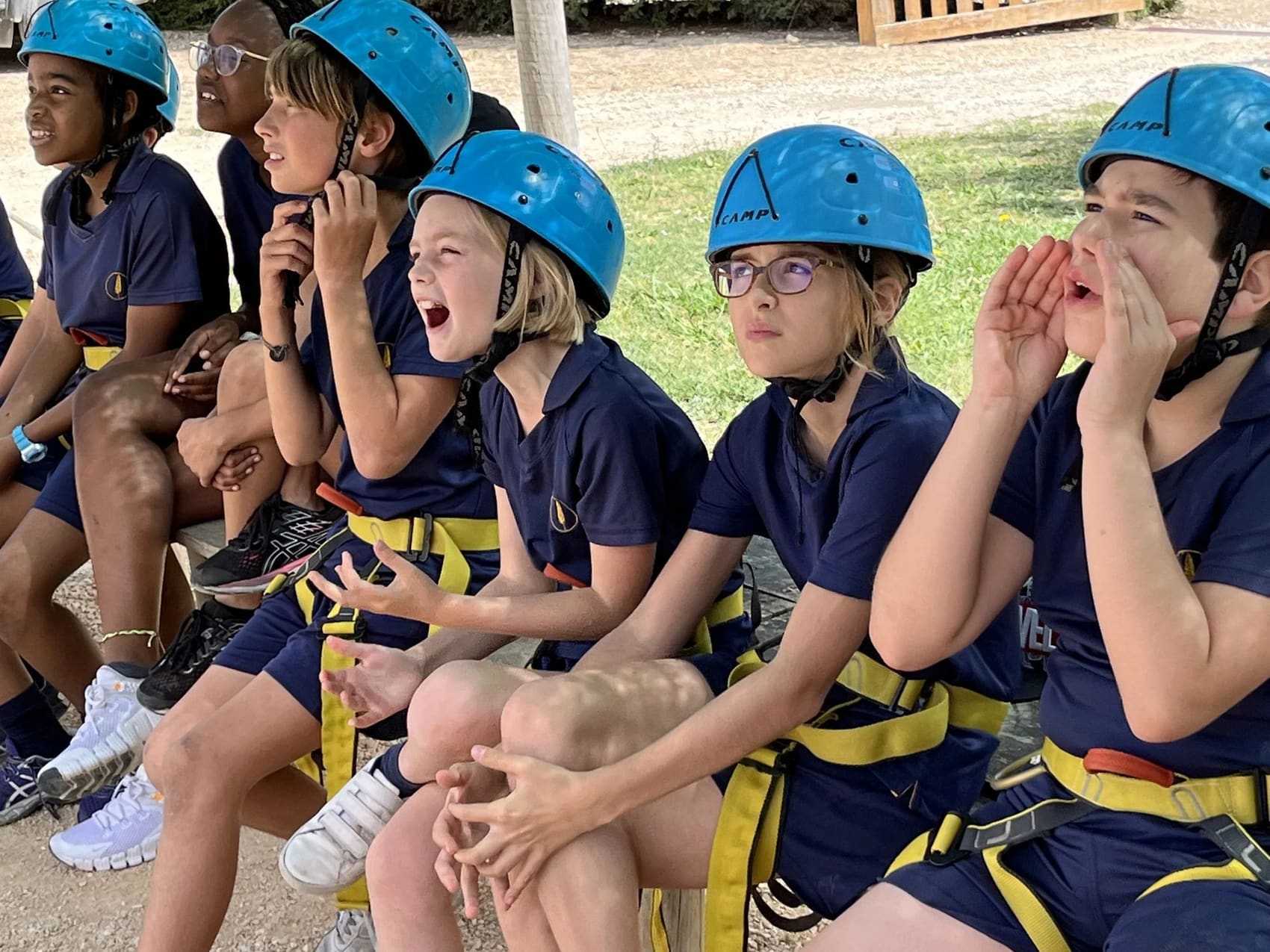
Executive Function: The Brain's Control System
Executive function is the cluster of cognitive skills that allow a person to plan, focus, adapt, and follow through. Research consistently shows it predicts adult success more reliably than IQ. Between ages 2 and 12, the brain's prefrontal cortex, the seat of these skills, is in its period of most rapid development.
Three components matter most. Working memory is the ability to hold information in mind and use it: following a multi-step instruction, keeping track of a story, remembering what the question was while working out the answer. Inhibitory control is the ability to pause before acting, to resist the impulse, manage distraction, stop and think before responding. Cognitive flexibility is the capacity to shift gears when plans change, rules change, or a problem requires a different approach. Adults rely on all three constantly: to manage money, sustain relationships, and function under pressure.
These skills are built through practice, and built best in environments that provide structure, challenge, and the freedom to struggle without being immediately rescued.
Emotional Regulation and Social Intelligence
A child who cannot name what they are feeling is at a significant disadvantage. Emotional granularity, the ability to distinguish frustration from disappointment, anxiety from anger, underpins behaviour, friendships, and every social environment that follows school. Children who can say "I feel frustrated" are measurably less likely to act that frustration out than children who simply feel "bad" and lack the vocabulary to describe it further.
Around age 4 or 5, children begin to develop Theory of Mind: the understanding that other people have thoughts and feelings different from their own. This is the cognitive foundation of empathy. By ages 10 to 12, with appropriate experience and modelling, it should have developed into real concern for others, not just recognising that someone feels a certain way, but caring about it. That develops in environments where conflict is treated as a learning opportunity rather than simply a behaviour problem, and where repairing relationships is taught as a skill.
Grit and the Growth Mindset
A child's relationship with failure forms early and shapes much of what follows. Children who believe their abilities are fixed, that they are either clever or not clever, respond to difficulty by withdrawing. Children who understand that effort changes outcomes respond to difficulty by trying again. Carol Dweck's research on this distinction is among the most replicated in educational psychology.
The practical expression of a growth mindset is frustration tolerance: the willingness to stay with a hard problem, rebuild a collapsed tower, try a different approach when the first one fails. It develops through experience of manageable difficulty, challenge calibrated so that success is possible but not guaranteed. Overprotection, where children are rescued from struggle before the frustration becomes productive, limits this development as reliably as harsh criticism does.
Delayed gratification, the ability to do something difficult now for a better outcome later, follows the same developmental logic. It is built through small, consistent experiences of effort preceding reward, not through lectures about perseverance.
Secure Attachment: The Launchpad
All of the above depends on one prior condition: a child who feels safe. Secure attachment, the relationship between a child and the stable, responsive adults in their life, is the launchpad for learning, exploration, and risk-taking. Children who are not psychologically safe do not experiment. They conserve energy managing threat. Academic progress built on a foundation of insecurity is brittle; it tends not to hold when conditions become demanding.
The "serve and return" dynamic, where a child reaches out and an adult responds reliably, is the mechanism through which secure attachment is built. It does not require perfect parenting. It requires consistent, warm attention, and the capacity to repair the relationship when it is disrupted. High warmth combined with high expectations is the parenting and teaching style most associated with the outcomes described in this article. Neither warmth alone nor expectations alone produces the same results.
What This Means
Academic content matters. But it sits on top of these foundations, and without them it does not hold. A child who can solve multi-step problems but cannot manage frustration will stall when secondary school becomes demanding. A child who has been academically drilled but has no experience of productive failure has not been set up to succeed, they have been set up to perform until the conditions are difficult enough to matter.
The prep school years, ages 7 to 11, are the window in which executive function, emotional regulation, and grit consolidate. The curriculum during this period should be doing two things simultaneously: building knowledge and building the learner. ISJ's approach to this is set out in more detail in the article Metacognition: The Learning Secret at ISJ.