

For lessons, yes. Pupils concentrate better when phones are out of the school day, and the gains are largest for children who find school hardest.
For sleep and mood, a school ban helps less than parents might hope. Most of the screen time that affects how children feel happens outside school hours, at home.
Better concentration, better results
In PISA 2022, 65% of 15-year-olds across OECD countries said their own phones or devices distracted them in at least some maths lessons. Pupils distracted by classmates' devices scored 15 points lower in maths than those who rarely were.
The clearest test of what a ban changes comes from England. Economists at the LSE's Centre for Economic Performance compared GCSE results in 91 schools in Birmingham, Leicester, London and Manchester before and after each school banned phones, over 2001 to 2011.
Results rose by 6.4% of a standard deviation on average. The gain came from pupils who had arrived with weaker results at age 11: the lowest-achieving fifth gained more than twice the average. The top fifth saw no change, because they were concentrating anyway.
The Netherlands took phones out of secondary classrooms nationally in January 2024. In the government's 2025 evaluation, 75% of secondary schools reported better concentration, 59% a better social atmosphere and 28% better results. These are the schools' own reports, without test scores.
Sleep and mood start at home
The SMART Schools study, published in The Lancet Regional Health – Europe in February 2025, is the largest test in England of school phone rules and wellbeing. It compared 1,227 pupils aged 12 to 15 in 30 secondary schools: 20 that restricted phones during the day and 10 that allowed them.
Pupils in the restrictive schools spent about 40 minutes less on their phones during the school day. Over a whole weekday or weekend day, their phone and social media time was no lower, and their wellbeing, anxiety and depression scores matched those of pupils in schools that allowed phones.
40 min
less phone time during the school day
No change
in total phone time on a weekday or weekend day
No change
in wellbeing, anxiety or depression
Total time is what mattered. Pupils who spent longer on phones and social media had poorer mental health, worse sleep, less exercise, lower attainment and more disruptive behaviour in class, whichever kind of school they attended.
Norway shows what a school can still do on its own. A 2024 study from the Norwegian School of Economics found that after middle schools banned smartphones, bullying fell among boys and girls, and girls needed less health care for psychological symptoms. The gains were largest for girls from poorer families.
"Phone-free" can mean very different things
A school can call itself phone-free whether the phone sits in a pupil's bag or in a locked cupboard. In England, the Department for Education asked 512 secondary school leaders in June 2026 which rule they used. Most chose the bag.
| Where the phone is | How it works | Schools |
|---|---|---|
| In the pupil's bag | Kept out of sight and not used | 70% |
| Handed in or locked away | Collected, or kept in a secure place the pupil cannot reach during the day | 21% |
| At home | Not allowed on school grounds | 4% |
The bag is where rules slip. Only 24% of secondary leaders said their phone rules were followed all of the time. Teachers put it at 21%, and pupils at 16%.
That gap matters for results. In the LSE study above, the gains came in schools where heads said the ban was well kept. Where it was weakly kept, there was no measurable effect.
England's government has reached the same view. In November 2026 it announced stronger guidance telling schools to go beyond "not seen, not heard" and keep phones "out of use and inaccessible" all day, through lockable pouches, collection at the start of the day, secure storage or a ban on bringing phones in.
Questions to ask a Jakarta school
Indonesia's education ministry issued Circular No. 18 of 2026 in July. It restricts phones during lessons and asks every school to write its own rules. The minister, Abdul Mu'ti, said it is not a ban.
Jakarta's education office went further in January. Its circular (No. e-0001/SE/2026) says phones, smartwatches and laptops should be switched off and collected in secure storage during school hours, with parents reaching children through the form tutor or counsellor. Schools that already had stricter rules keep them.
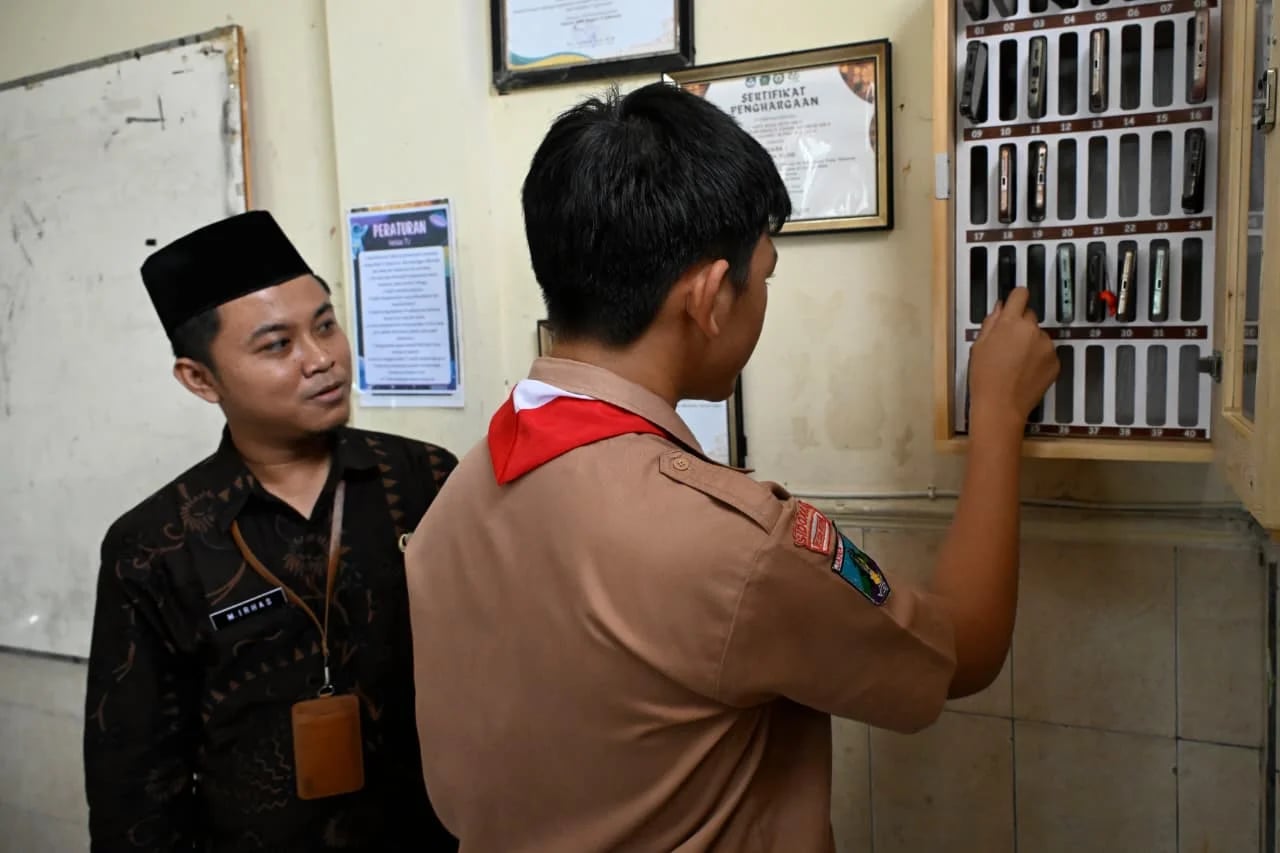
Both leave the detail to each school, so practice varies from one Jakarta school to the next, international schools included. These questions show where a school stands:
| Ask | A strong answer |
|---|---|
| Where is my child's phone during the day? | Handed in or locked away, out of the pupil's reach |
| Does the rule cover break and lunch? | Yes, from arrival to home time |
| Who checks, and what happens if a pupil breaks it? | Named staff and a set consequence, applied every time |
| Are smartwatches covered? | Yes, under the same rule as phones |
| How do I reach my child in an emergency? | Through the school office or form tutor |
The hours after school
Pupils interviewed for the Milburn review in England said they stayed up as late as 3am scrolling on their phones. No school rule reaches that far.
Indonesia's ministry puts the evening in parents' hands. Its July circular asks families to follow a "3S" approach at home: screen time, screen zones and screen breaks, set to the child's age.
Frequently Asked Questions
Do phone bans in schools improve results?
For pupils who find school hardest, yes. A study of 91 schools in four English cities found GCSE results rose after phones were banned, with the lowest-achieving fifth of pupils gaining more than twice the average and the top fifth showing no change. The gains appeared only where the ban was well enforced.
Do school phone bans help mental health?
On their own, only a little. The SMART Schools study of 1,227 pupils in England found no difference in wellbeing, anxiety or depression between schools that restrict phones and schools that allow them. A Norwegian study found bullying fell after bans, and girls needed less health care for psychological symptoms.
Are phones banned in schools in England?
Yes. Statutory guidance in force since 29 June 2026 tells every school in England to prohibit phone use for the whole school day, including breaks and lunch. Sixth formers may be allowed phones at set times and places.
Are phones banned in schools in Indonesia?
No. The education ministry's Circular No. 18 of 2026 restricts phones during lessons and leaves each school to set its own rules. In Jakarta, the education office asks schools to collect phones in secure storage during school hours.
What is a lockable phone pouch?
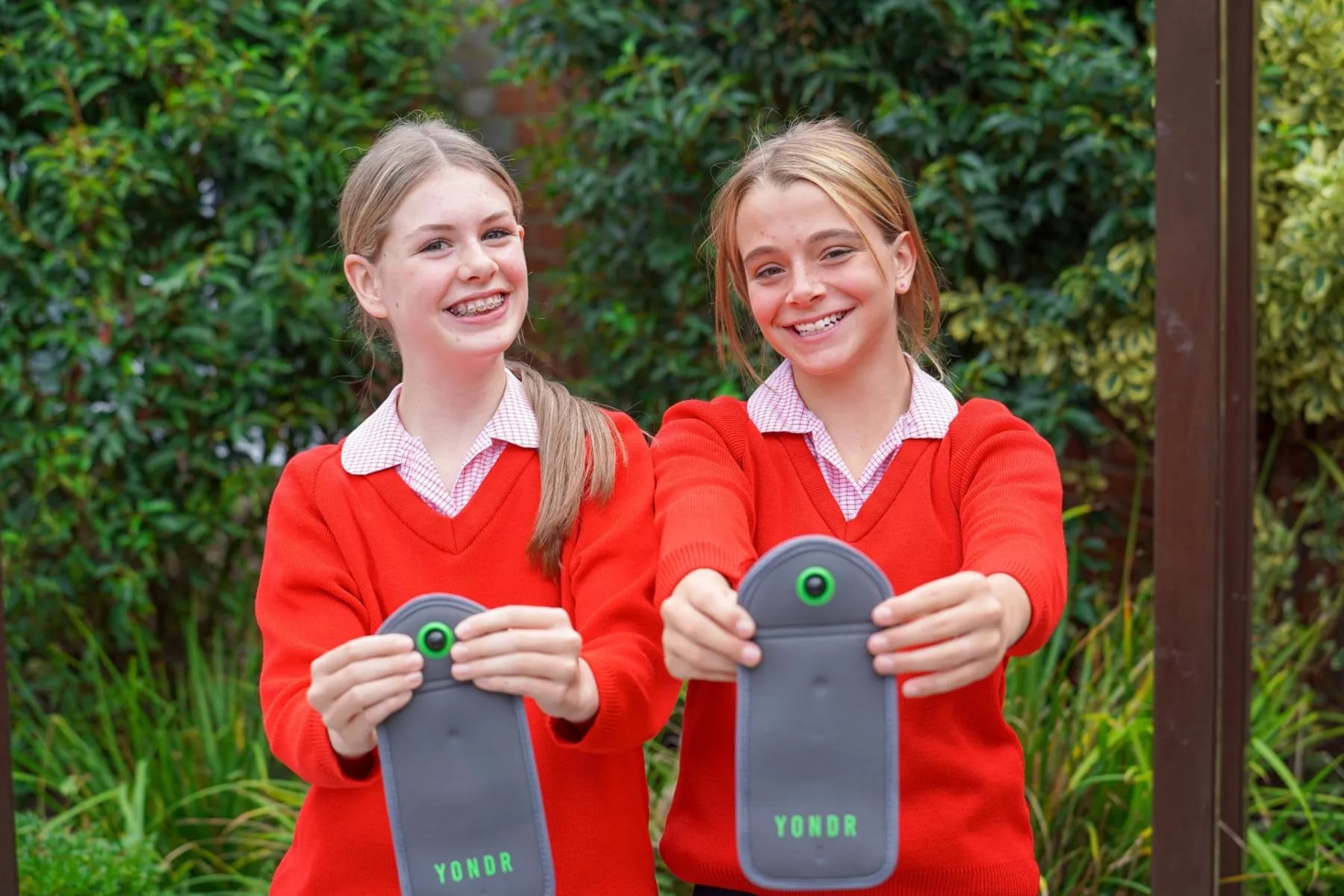
A fabric pouch the pupil keeps with them all day, locked at the school gate and released on the way out. The phone stays with the child but cannot be used, and England's government lists pouches among the ways schools can keep phones out of reach.
Sources
- Beland and Murphy: Ill Communication: Technology, Distraction and Student Performance, CEP Discussion Paper 1350, London School of Economics (2015)
- OECD: PISA 2022 Results, Volume II (December 2023)
- Kohnstamm Instituut and Oberon: Monitoringsonderzoek landelijke afspraak mobiele telefoons en andere devices, for the Dutch Ministry of Education (2025)
- Goodyear et al.: School phone policies and their association with mental wellbeing, phone use and social media use (SMART Schools), The Lancet Regional Health – Europe (February 2025)
- Abrahamsson: Smartphone Bans, Student Outcomes and Mental Health, NHH Norwegian School of Economics Discussion Paper 1/2024
- Department for Education: School and College Voice, June 2026
- Department for Education: Strengthened guidance to take the next leap to phone-free schools (10 November 2026)
- Department for Education: Mobile phones in schools, statutory guidance (statutory from 29 June 2026)
- Gebrak.id: Kemendikdasmen issues SE No. 18 of 2026 on restricting devices in schools (14 July 2026)
- Jawa Pos: Jakarta education office restricts phones in schools, SE No. e-0001/SE/2026 (21 January 2026)