

Evidence-based teaching is the application of what cognitive science and decades of classroom research have shown to work: structured instruction, retrieval practice, well-timed inquiry, and feedback that pupils can act on. ISJ's teaching model is built on these principles, applied with professional judgement across every year group from Early Years through Year 8.
Structured Lesson Design
Lessons at ISJ follow a clear instructional sequence. Teachers share the objectives at the start of each lesson alongside the criteria for successful work.
Content is introduced in small, carefully sequenced steps. Teachers model procedures, provide worked examples, and make cognitive processes visible, particularly in Mathematics, English and Science, where misconceptions compound quickly if they go uncorrected. Pupils practise with support before moving to independent tasks.
Explicit Instruction as a Foundation
Explicit instruction is the bedrock of teaching at ISJ, especially when introducing new or complex material. In English, teachers model analytical writing using shared examples and sentence structures. In Mathematics, they demonstrate multiple methods before guiding pupils to evaluate the efficiency of each. In Science, they introduce scientific vocabulary, show how to structure an investigation, and name common reasoning errors before they become entrenched.
Understanding is checked continuously through questioning that samples the whole class, not just the pupils who volunteer. This allows ISJ teachers to identify and correct misconceptions early rather than building further instruction on shaky ground.
Retrieval Practice and Long-Term Retention
Learning depends on memory. To strengthen retention, ISJ pupils engage in regular retrieval practice: short recall tasks, low-stakes quizzes, spaced review, and the deliberate revisiting of past topics. This is built into daily teaching rather than added as a bolt-on at revision time.
A typical lesson may begin with a brief review task designed to activate prior knowledge. Teachers interleave related concepts so pupils learn to discriminate between them and apply knowledge flexibly. Retrieval practice improves fluency, reduces forgetting, and builds the scaffolding for more complex reasoning later on.
Purposeful Inquiry Once Knowledge Is Secure
After core knowledge is established, ISJ teachers introduce inquiry-oriented tasks designed to promote analysis, synthesis and independent thinking. The order matters. Structured investigations in Science, source evaluation in History, debates in Global Perspectives, and thematic interpretation in English literature are all planned for the point at which pupils possess the relevant knowledge to think independently.
Unguided discovery is inefficient for novice learners; structured inquiry adds value once pupils have the conceptual foundation to engage with it. Inquiry at ISJ is an extension of prior learning, not a substitute for instruction.
Differentiation Through Pacing and Support
ISJ differentiates through the scaffold and pace of tasks, not through parallel curricula or reduced expectations. All pupils work toward the same ambitious goals. The variation lies in how they are supported on the way there.
Teachers may break tasks into smaller steps, provide sentence starters or visual cues, offer extension problems with greater complexity, or revisit content with specific pupils. This allows every child to engage with challenging work without compromising rigour or progression.
Feedback Designed to Move Learning Forward
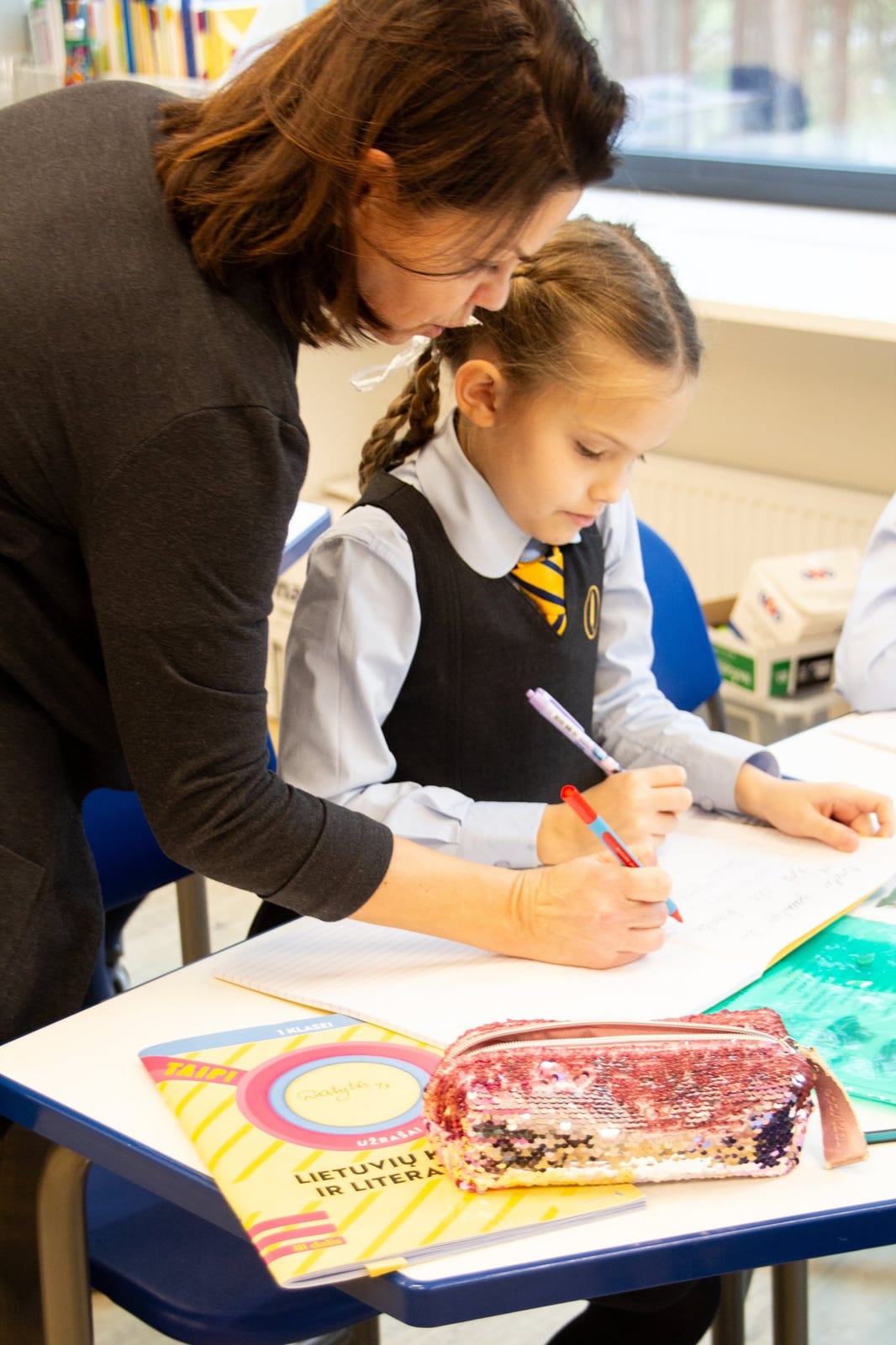
Feedback at ISJ is timely and specific. Verbal feedback during lessons allows pupils to improve work before a lesson ends. Written feedback is provided when it serves a clear instructional purpose, not as a default response to every piece of work. Whole-class feedback addresses the common misconceptions that emerge across a set, rather than correcting each pupil individually in writing.
Pupils are taught how to respond to feedback: how to redraft, how to close gaps, and how to evaluate their own progress. This builds self-regulation alongside subject knowledge.
A Calm Environment for Serious Work
Calm, orderly classrooms are a precondition for learning. ISJ teachers establish consistent routines for entering, transitioning and concluding lessons. Expectations are explicit and applied predictably. These routines free cognitive resources for the work that matters.
Pupils in settled environments are more willing to ask questions, attempt difficult tasks, and participate without fear of disruption. The result is a school culture in which intellectual risk-taking feels safe.
Professional Development and Consistency of Practice
All ISJ teachers are UK-qualified and bring experience from British independent schools or high-performing international settings. Professional development is ongoing: staff participate in coaching sessions, joint curriculum planning, and peer observation. The focus is on improving specific instructional practice rather than on adopting new initiatives wholesale.
Pupils encounter coherent teaching as they move across year groups and subjects, rather than adapting to a different pedagogical culture in each classroom. How this connects to assessment and progression is on the ISJ curriculum page.
Teaching method is one axis on which Jakarta's schools differ.
Common Questions
What does "evidence-based teaching" mean at ISJ?
ISJ's teaching methods are grounded in research from cognitive science, curriculum studies, and effective UK independent school practice. Lessons follow structured instructional sequences, use retrieval practice, and provide clear modelling and feedback at each stage.
Why does ISJ emphasise explicit instruction?
Explicit instruction ensures pupils build secure foundational knowledge before moving to independent or inquiry-based tasks. Research consistently finds this approach benefits most learners, particularly when new or complex ideas are introduced.
What is retrieval practice and why is it important?
Retrieval practice strengthens long-term memory by requiring pupils to recall and apply prior learning. It is built into daily teaching through short review tasks, low-stakes quizzes, and spaced revisiting of content, making it a core feature of lessons rather than a revision-season addition.
How is inquiry used in the classroom?
Inquiry is introduced once pupils have the knowledge required to think independently. It is structured, purposeful and designed to deepen analysis, whether through experiments, debates, or source evaluation. It is not used as a teaching method for introducing new content.
How does ISJ differentiate for pupils at different levels?
Differentiation is achieved by adjusting pace, scaffold and task complexity rather than lowering expectations. All pupils work toward the same high standards, with tailored support provided where it is needed.
What does feedback look like at ISJ?
Feedback is timely and specific. Teachers prioritise verbal feedback during lessons so pupils can act on it immediately. Whole-class feedback is used to address shared misconceptions efficiently, and pupils are expected to revise or redraft work in response.
How does ISJ ensure a productive learning environment?
Calm, orderly classrooms are achieved through consistent routines and clear expectations. This protects instructional time and allows pupils to concentrate and participate fully in each lesson.
Are ISJ teachers trained in these methods?
All ISJ teachers are UK-qualified and receive ongoing professional development, coaching and peer observation. Consistency of practice across the school is one of its defining characteristics.
How do parents know this approach works?
The methods used at ISJ align with the strongest evidence from the Education Endowment Foundation, Ofsted research reviews, and leading British preparatory schools. The evidence links them to long-term learning rather than short-term performance.