

Schools are routinely judged on exam results, and results matter. But the evidence on what produces strong academic outcomes points somewhere wider. Children who receive rich enrichment, structured creative education, and consistent pastoral care tend to perform better academically, not in spite of these elements, but because of them.
Enrichment as a Cognitive Accelerator
Children exposed to varied experiences, including music, drama, visual art, competitive sport, outdoor learning, and design, build broader cognitive schema. Schema are the mental structures that organise background knowledge, and the richer they are, the more effectively a child can read, infer, reason, and understand. Reading comprehension depends heavily on schema depth: a child who has made things, performed, and competed has more to draw on when interpreting new material.
The Education Endowment Foundation notes that participation in arts and culture correlates with improvements in writing and reading outcomes. Structured competitive sport has been linked to gains in executive function, covering working memory, inhibition control, and cognitive flexibility. Music enhances auditory processing and language development. Drama improves verbal memory and social cognition.
Creativity Is a Disciplined, Academic Skill
The idea that creativity means giving children freedom to express themselves without constraint is both persistent and unhelpful. Research distinguishes domain-specific creativity, creative thinking within a subject, from domain-general creative fluency. In mathematics, creativity means recognising patterns and exploring alternative problem-solving strategies. In science, it means forming hypotheses and designing experiments. In writing, it means shaping narrative and managing argument. These are forms of disciplined reasoning, not free improvisation.
Children develop creative capacity most reliably when taught foundations first: technique, vocabulary, method, and form. An art pupil who has studied perspective and colour theory will produce more original expressive work than one told simply to draw what they feel. More importantly, these habits migrate. A pupil who learns to analyse a piece of music will analyse a poem more precisely. Structured creative thinking transfers across subjects when the school treats it as a serious academic discipline.
Clubs, Sport, and the Formation of Identity
Beyond the timetable, enrichment takes its most visible form: clubs, societies, sports fixtures, productions, and competitions. Research on adolescent development identifies extracurricular involvement as one of the strongest predictors of later academic engagement and wellbeing. Children involved in two or more structured activities tend to show higher attainment and better long-term outcomes than those involved in none.
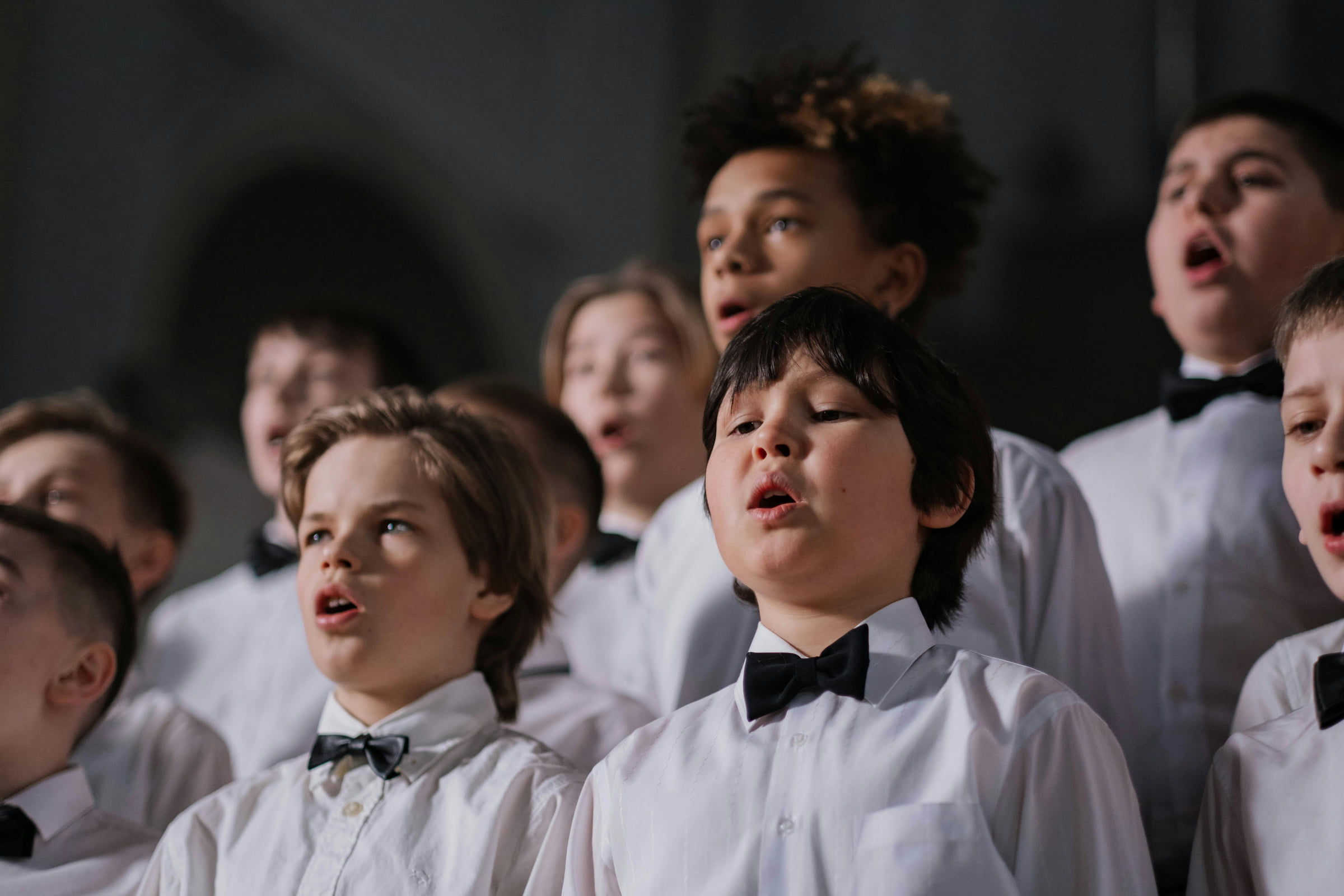
Activities including choir, robotics, competitive team sport, debate, and ensemble music provide stable communities of practice. For children navigating international transitions, these communities offer identity anchors at a period when academic and social self-concepts are still forming. A child who identifies as a musician or a debater has something to return to when academic performance fluctuates. That grounding gives children the confidence to take intellectual risks. Quantity of activities matters less than quality and consistency.
Pastoral Care as an Academic Support System
Pastoral care is often reduced to emotional support or discipline management. It is closer to the set of conditions in which children can learn. Attachment theory is the clearest starting point: children learn more effectively when they have secure relationships with trusted adults. Harvard's long-term resilience studies confirm that the presence of one reliable, caring adult is one of the strongest protective factors in child development, stronger even than socioeconomic circumstance.
A form teacher or tutor who knows a child well is academically significant. That relationship allows the adult to notice patterns: fatigue, anxiety, social difficulty, sudden disengagement. Early identification of these patterns, before they calcify into barriers, protects academic continuity. Emotional literacy is the other central component. Children who can recognise, articulate, and regulate their emotions sustain attention better, recover from setbacks faster, and approach challenging work with less avoidance. Social-emotional learning programmes, when evidence-based, are linked to improvements in behaviour, wellbeing, and academic outcomes. In an international school serving mobile families, pastoral systems must also address transitions, cultural adjustment, and the pressures that come with frequent relocation.
Why Breadth Produces Depth
A narrow focus on examinations, at the expense of creative, cultural, and pastoral investment, tends to produce fragile high achievers: children who perform well in familiar conditions but struggle when the conditions change. Breadth tends to produce a different kind of learner, adaptable and able to manage complexity. Creative expression gives children non-verbal ways to process emotion. Sport reduces anxiety and builds social bonds. These domains reinforce one another when they are treated as an ecosystem rather than managed as separate programmes.
Evaluating Enrichment Quality
A long list of clubs and activities can disguise a programme with no coherent purpose. The distinguishing factors are coherence, a clear pedagogical rationale; progression, development across year groups; consistency, regular participation rather than occasional events; and integration, real links between enrichment and the curriculum. Expertise in the staff who lead activities matters, as does reflection: pupils examining what they have experienced and why it was valuable.
Pastoral care should be equally observable: clear routines, structured communication, trained staff, and explicit safeguarding procedures. Schools that treat enrichment and pastoral care as serious, research-informed domains create the conditions in which academic attainment and personal development reinforce one another. Parents can explore how these commitments sit within the broader school day across sport, arts and music, and character.
Enrichment and pastoral systems differ more between Jakarta schools than any prospectus suggests.
Common Questions
Why do high-performing schools invest heavily in enrichment and co-curricular programmes?
Structured enrichment improves cognitive development, executive function, motivation, resilience, and long-term academic outcomes. Activities including music, drama, sport, and clubs expand knowledge networks and strengthen the learning behaviours that underpin academic progress.
How does creativity contribute to academic attainment?
Creativity strengthens domain-specific thinking. In mathematics it supports pattern recognition; in science it enables hypothesis generation; in writing it develops voice and argument structure. Creativity is most effective when taught through disciplined practice, not unstructured free expression.
What pastoral systems matter most in international schools?
Key factors include secure adult relationships, emotional literacy teaching, early identification of difficulty, safeguarding clarity, and structured routines. Strong pastoral care supports concentration, behaviour regulation, and academic progress, particularly in schools serving mobile international families.
How do enrichment and wellbeing interact in child development?
Participation in arts, sport, outdoor learning, and clubs provides identity anchors, reduces stress, and builds confidence. These protective effects support better academic performance and social stability, and are especially important in transient international communities where social roots take time to form.
Does enrichment compensate for life in a dense urban environment like Jakarta?
Structured outdoor learning, experiential challenge, and access to varied physical environments help regulate mood, reduce anxiety, and improve executive function. Children growing up in dense cities benefit disproportionately from purposeful outdoor experiences, making a strong enrichment programme both an educational and a developmental priority.
How can parents assess the quality of a school's enrichment programme?
Look for coherence, progression, trained staff, regular participation, and real breadth rather than a long menu of disconnected activities. Strong programmes feel designed and integrated. The same standard applies to pastoral systems: observable routines and structured communication matter more than stated good intentions.
What role does leadership development play in academic and personal growth?
Leadership opportunities, through house systems, councils, mentoring, and service projects, build agency, communication skills, resilience, and cultural competence. These qualities improve academic motivation and prepare pupils for transitions between countries and school systems.
Why is pastoral care especially important in international schools?
Internationally mobile children face additional transitions: cultural, linguistic, academic, and social. Effective pastoral care stabilises these disruptions by providing consistent adult relationships and structured emotional support, protecting academic continuity across moves.