
Two kinds of family arrive at Jakarta's international schools. Expat families on a corporate posting or self-funded relocation, holding a KITAS or a longer-stay visa. And Indonesian families with one foreign parent, returning from overseas, or simply choosing an English-medium school in Pondok Indah for their child. The two groups sit in the same classroom and face different rules. The framework that joins them is the SPK regulation, and its interaction with each child's passport decides what they study and which exams they take.
The Five Visa Routes Families Use
Most expat families enrol their child on a Dependent KITAS linked to one parent's Work KITAS. Spouse and children under 18 are added to a single permit; the spouse cannot work on this route. The Work KITAS takes six to ten weeks to process, which is why most families start the school search and the visa process at the same time.
Foreigners married to an Indonesian citizen use the Spouse KITAS, with a path to permanent residency after one year. Self-funded families have two newer options. The Second Home Visa gives five to ten years of stay in exchange for a USD 130,000 deposit at a state-owned bank, or property worth USD 1 million. The Golden Visa covers individual investors, property buyers, and global talent on similar timelines. Both permit school enrolment and include the family as dependents.
None of these visas confers domestic-fee status. Tuition is the same in IDR or USD, regardless of passport.
SPK Schools and What the Rule Changes
Since 2014, every school in Indonesia teaching a foreign curriculum has registered as Satuan Pendidikan Kerja Sama. JIS, BSJ, NAS, ISJ, AIS and the rest of Jakarta's English-medium options are all SPK schools. The category is administrative. Around 681 SPK schools operate nationally.
Three things follow. Foreign passport children cannot enrol in standard Indonesian national schools; SPK schools are their only formal option. Indonesian passport children can attend SPK schools, an option that did not exist before 2014. And every SPK school teaches three local subjects: religious education (Agama), Bahasa Indonesia, and civics (PPKn). How those subjects apply depends on the child's passport.
What the Two Tracks Look Like
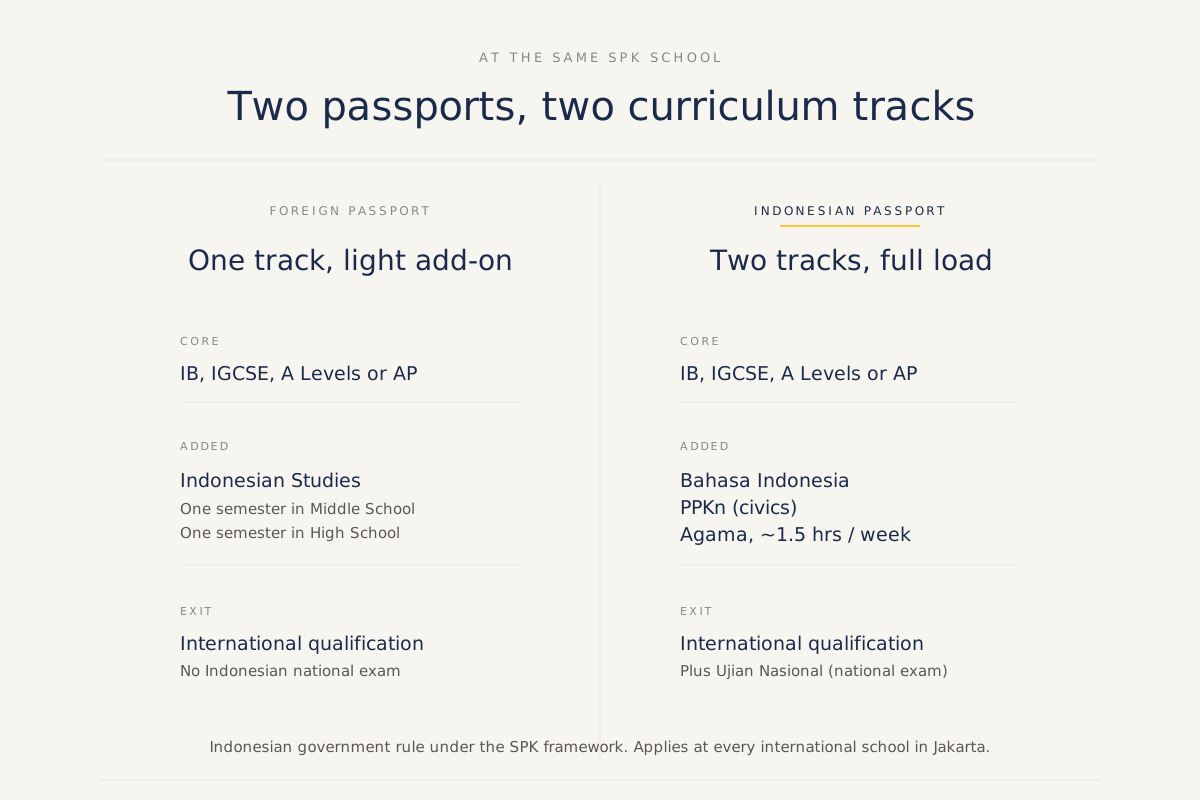
Foreign passport students sit a one-semester Indonesian Studies course once in Middle School and once in High School. They take their international qualification, IB, IGCSE, A Levels or AP, and exit on that.
Indonesian passport students follow the same international curriculum but also enrol in Bahasa Indonesia and PPKn across the full programme, attend Agama for around 1.5 hours per week, and sit the Ujian Nasional national examinations at mandated grade levels. This is the part most families discover late. A wealthy Indonesian family enrolling their child at a Pondok Indah international school assumes the day-to-day experience matches what the expat child next door has. The classroom is the same. The subjects added on top are not.
Schools handle this routinely. Timetabling around Agama and Bahasa Indonesia affects extracurriculars, exam preparation, and university applications. The Ujian Nasional also constrains which year groups Indonesian passport children can join mid-year; some schools do not accept transfers into Year 6 or Year 9 equivalents during the second semester.
Dual Nationality and the Age-21 Decision
Indonesia does not allow dual citizenship for adults. PP 21/2022 lets children of mixed marriages hold limited dual citizenship until their 21st birthday. Two practical points. Parents must register the child before age 18, or the option lapses. And between 18 and 21 the child declares one citizenship and surrenders the other.
The school track they sat will already have shaped their qualifications. For families weighing a UK, Australian or US university pathway, the additional Indonesian load matters. For families planning a domestic university or long-term Indonesian residency, those components carry value. The passport a child enrols on at six shapes what they study at sixteen.
What Schools Ask for at Admission
The KITAS itself is not a gate at the offer stage. Schools accept a sponsor letter from the employer stating the KITAS is in process, with the card following once the family arrives. The core documents are the same across schools: passport pages for the child and both parents, the previous two to three years of school reports, immunisation records, the child's birth certificate (notarised translation if not in English), and the parents' marriage certificate where dependent sponsorship applies. Indonesian passport families add a Kartu Keluarga and the child's Indonesian birth certificate. Dual nationality children submit both passports and an affidavit confirming their limited dual status.
Where the Cluster Sits
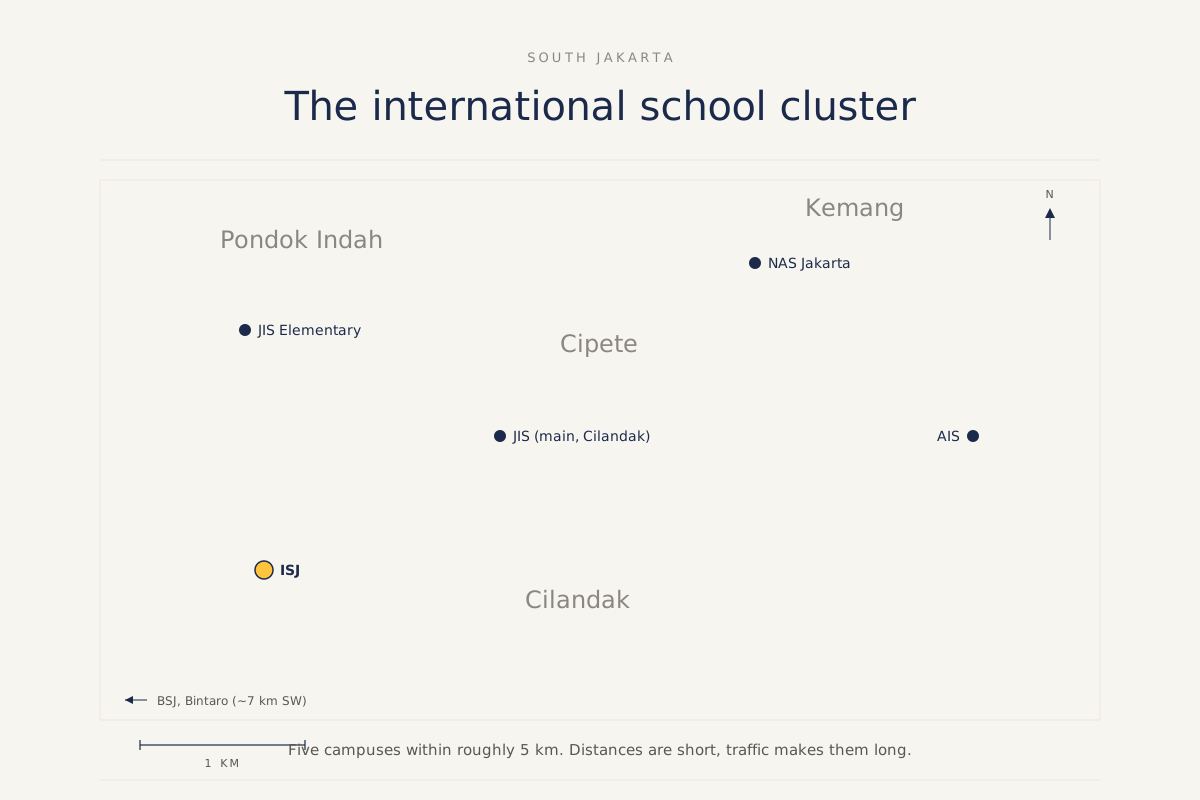
The schools that serve expat and English-speaking Indonesian families cluster in a tight belt of South Jakarta. Distances are short. Traffic makes them long. A campus 5 km away during the morning run can sit 45 minutes away in the car. Most families end up in Pondok Indah, Cilandak, Cipete or Kemang, with school choice driving neighbourhood choice rather than the other way round.
Families starting the relocation conversation usually want to put the school decision in motion before the lease is signed. The relocating to Jakarta guide covers the wider sequence: visa, school, housing, and the order in which to take them.