
Disaster Management and Business Continuity Plan
Section 1. General Context and Policy
The Disaster Management and Business Continuity Plan is set within the context of the School's risk management policy, risk management planning, and financial planning as a whole.
The School has a Risk Management Policy which:
- Describes the School's approach to risk management
- Identifies responsibilities for risk, disaster management, and business continuity
- Outlines how risks are identified, categorised, and controlled via the Risk Register
- Sets out how risks and controls are reviewed so that the Board can satisfy itself that significant risks are managed and appropriate contingency plans are in place
The School maintains procedures to meet the expectations of UK inspection frameworks for British schools overseas, including appropriate risk management, disaster recovery, and business continuity planning.
Critical incidents and major disasters are identified on the risk assessment pro-forma in Appendix A. Controls and mitigation measures are recorded, and critical functions are prioritised.
The School maintains related policies and procedures including:
- Health and Safety
- Safeguarding and Child Protection
- Fire Safety and Lockdown
- IT and Data Protection
- Whistleblowing
The School recognises the major risks of fire, flood, severe weather, security incidents, ICT failure, fraud, and reputational risk, and has in place risk assessment procedures, preventative control measures, contingency and recovery plans, and review processes to identify lessons learned.
The School, in cooperation with its insurers, seeks to transfer appropriate levels of financial risk through insurance.
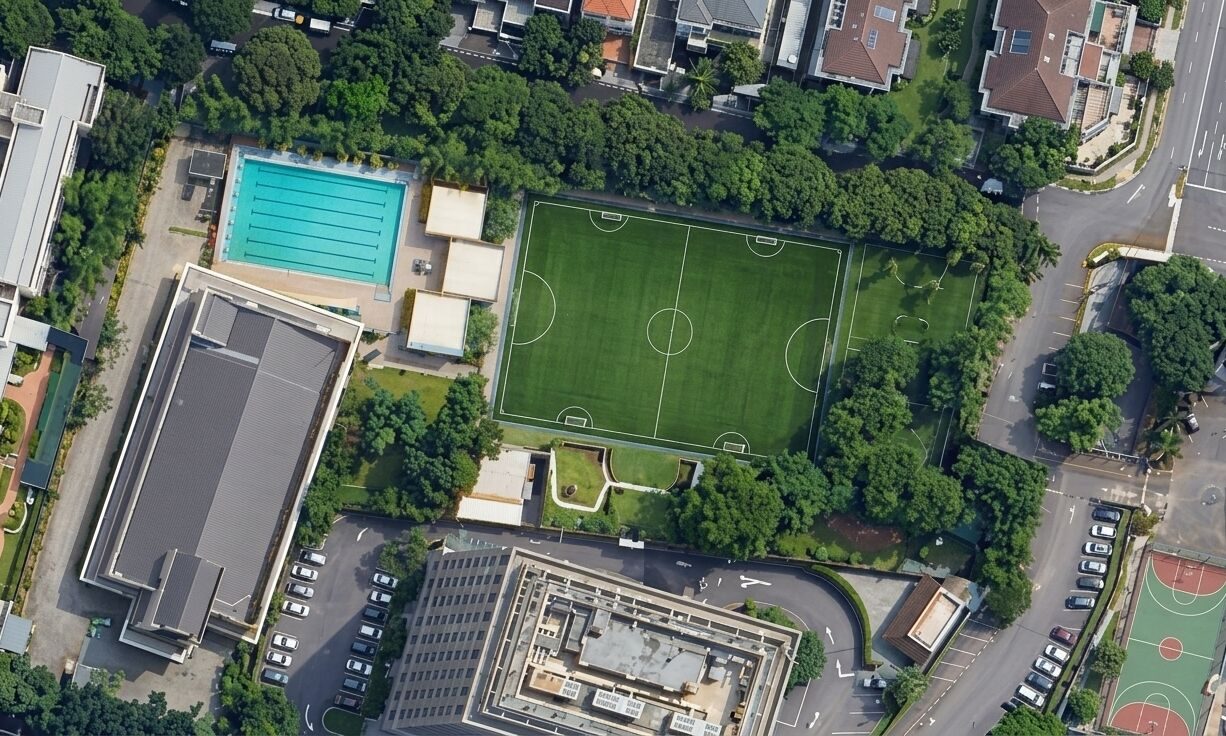
This Plan applies to The Independent School of Jakarta, Pondok Indah campus. Copies of this Plan are held securely on site and electronically. Members of the Disaster Management Group (DMG) have access to the Plan. The School maintains procedures for the review, testing, and updating of this Plan.
Section 2. Introduction
Disaster management and business continuity planning is the process by which the School maximises safety, minimises disruption, and ensures early recovery following an unforeseen incident.
The phases of incident management are:
- Early Warning Phase
- Trigger Phase
- Control Phase
- Recovery Phase
- Review Phase
An incident may occur at any time, with little or no warning. This Plan provides guidance and structure but may require adaptation to meet the circumstances of the incident. The School's primary priority is the safety and wellbeing of pupils, staff, and visitors. Thereafter, the priority is to restore education and operations as quickly and safely as possible. This Plan applies to areas under the direct management of the School and does not extend to private residences or third-party premises.
Section 3. Disaster Management Group (DMG)
Composition
The Disaster Management Group (DMG) is led by the Head of School and comprises members of the Senior Leadership Team. Other staff may be co-opted as required, depending on the nature of the incident.
Roles and Responsibilities
Head of School
Overall command of the incident; Chair of the DMG; sole authorised spokesperson unless explicitly delegated.
Senior Leadership Team (SLT)
Collective responsibility for strategic coordination, decision-making, and operational management of the incident, including: health and safety and site control; liaison with emergency services; ICT and data access and recovery; staff and pupil welfare; communication with parents and the school community (as directed).
Other Staff (as required)
Support roles delegated by the Head of School or SLT, appropriate to the incident.
Section 4. Control Centre
In a major incident, a Control Centre will be established on site as determined by the DMG. Primary and alternative locations are designated in the School's operational records held by the Head of School.
Section 5. Immediate Disaster Action Levels and Incident Definitions
Level 1 – Green (Low Impact)
Minimal hazard. Minor disruption. Managed locally.
Level 2 – Amber (Moderate Impact)
Potential safety risk. Partial disruption. SLT coordination required.
Level 3 – Red (Severe Impact)
Serious risk to life or safety. Major disruption or site closure. Full activation of this Plan.
The Head of School determines escalation level.
Section 6. Disaster Communications Protocol
- All communications are coordinated centrally
- The Head of School is the primary spokesperson
- No staff member may communicate externally without authorisation
- Parents are informed promptly through agreed channels
- A log of all communications and decisions is maintained
Section 7. Immediate Disaster Recovery Actions
Once safety is secured:
- Critical functions are prioritised
- Temporary arrangements for teaching and operations are implemented
- ICT and data systems are restored
- Insurance notification and loss assessment begins
- Welfare support is provided to pupils and staff
Section 8. Plan Maintenance, Awareness, and Testing
The Head of School holds overall responsibility for this Plan and may delegate elements of maintenance, awareness, and testing to members of the Senior Leadership Team as appropriate.
Responsibilities include:
- Maintaining and updating the Plan
- Ensuring accurate contact details and appendices
- Raising staff awareness
- Organising and evaluating testing and exercises
Section 9. Plan Review
This Plan is reviewed:
- Annually
- Following any major incident
- Following significant organisational or significant site changes
Appendices
- Appendix A: Risk Assessment Information
- Appendix B: Emergency Contacts
- Appendix C: Emergency Contact Tree
- Appendix D: Critical Records and Data Backup
- Appendix E: External Agencies
- Appendix F: Emergency Accommodation (if applicable)
- Appendix G: Evacuation and Accident Procedures
Appendices are held securely by the Head of School and Disaster Management Group and are not published publicly.