
Ask almost any parent what they would change about schools, and smaller class sizes will appear near the top of the list. The idea has strong intuitive appeal: fewer pupils means more attention, fewer distractions, and better outcomes.
The instinct largely holds up. The research is surprisingly consistent: small class sizes can make a real difference, especially in the early years and primary phase. Their impact depends on when they are introduced, how they are used, and who is teaching.
Where the Evidence Is Strongest
Study after study shows that class size reductions have the biggest impact on younger pupils. In the early years of schooling, children are developing foundational skills, including language, literacy, self-regulation, and working memory, that are especially responsive to adult interaction and feedback. Small classes allow teachers to notice more, respond more, and intervene earlier.
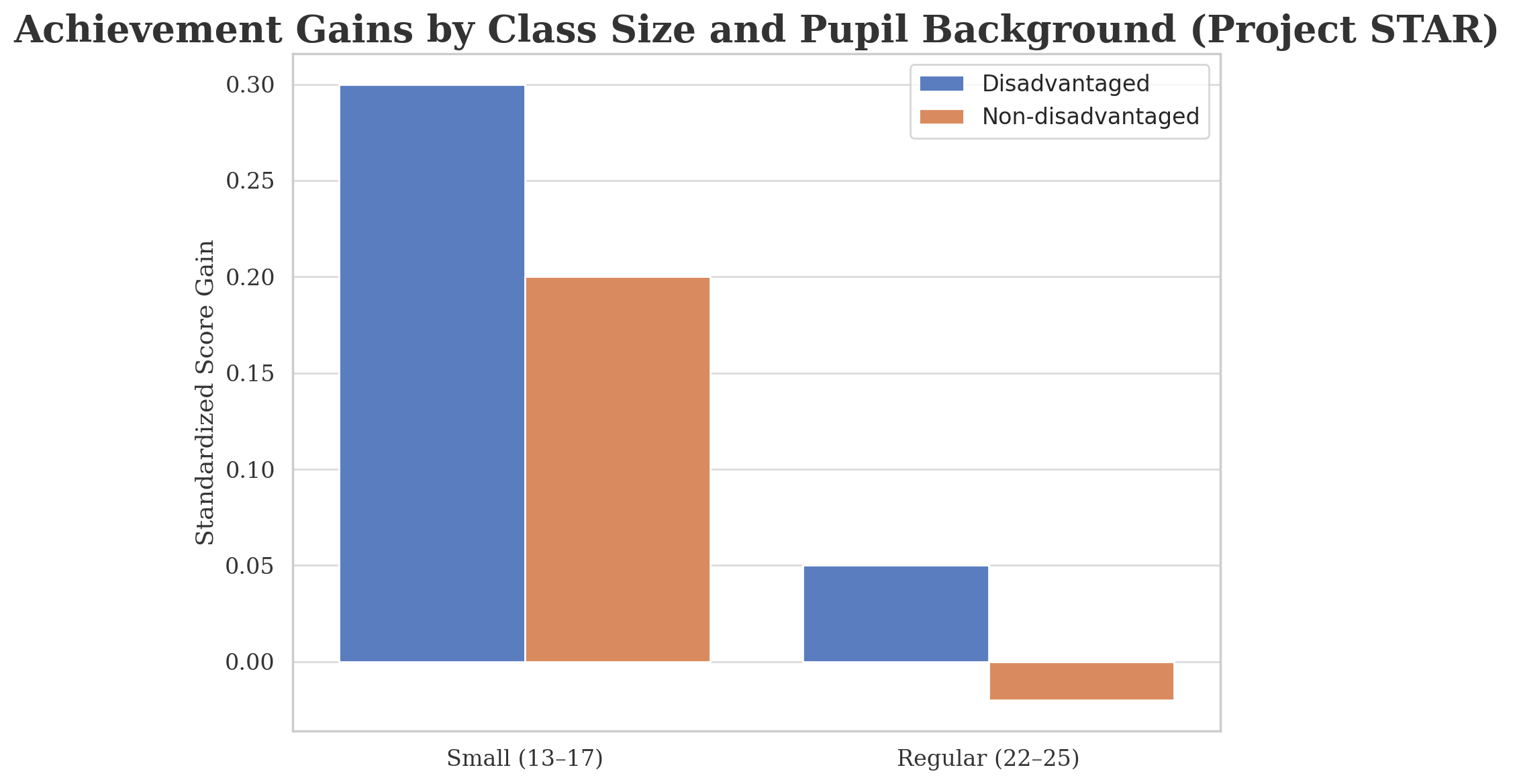
The landmark Project STAR study in Tennessee found that reducing class sizes to 13 to 17 students (compared to the typical 22 to 25) produced significant and lasting benefits in reading and maths for pupils in Reception through Year 3. These benefits were most pronounced for disadvantaged pupils but visible across the board. Gains persisted into secondary school.
UK-based research led by Blatchford, Bassett, and Brown found that smaller class sizes in Key Stage 1 enabled more individualised instruction, better behaviour management, and improved academic outcomes. Gains were modest in absolute terms but meaningful over time, particularly for children at risk of falling behind.
Why Class Size Matters Less in Secondary
By secondary school, the picture becomes more complex. Older pupils are more independent, learning is more specialised, and the teacher's subject expertise becomes more important than the number of pupils in the room.
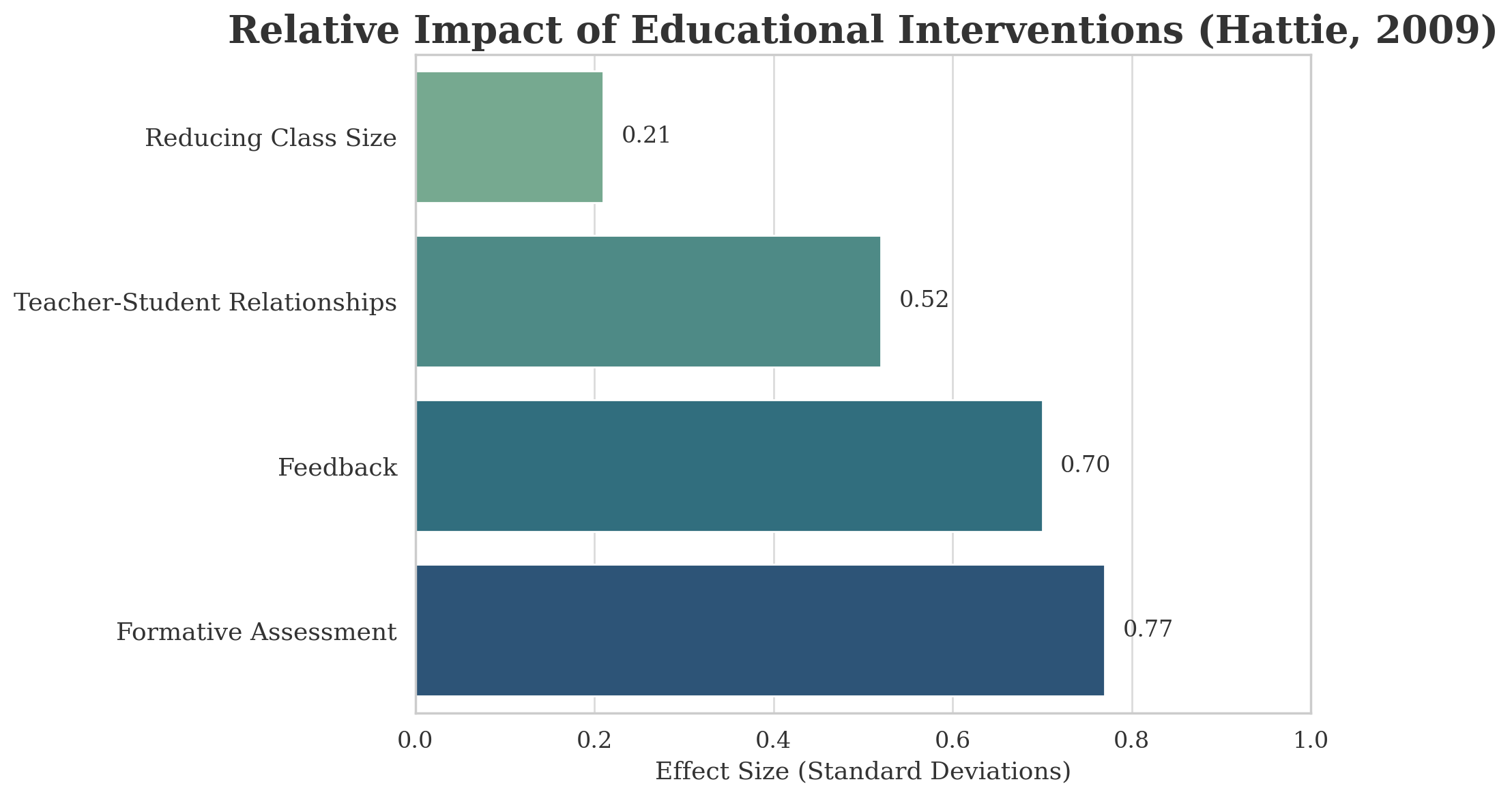
In John Hattie's Visible Learning meta-analysis, reducing class size had an effect size of 0.21, well below more impactful interventions like formative assessment (0.77), feedback (0.70), or teacher-student relationships (0.52). Hattie's conclusion was not that class size does not matter, but that it rarely shifts outcomes on its own.
The OECD's PISA data supports this. High-performing systems like China and Singapore operate with relatively large class sizes yet still achieve top outcomes, largely due to consistent teaching quality and strong curriculum frameworks.
The Trade-Offs
Reducing class sizes is expensive. It means more teachers, more classrooms, and more operational overheads. In many systems, a small drop in class size may deliver less impact than the same investment in teacher training, curriculum development, or targeted support for struggling pupils.
Yet this is not an either/or decision. Class size reduction, when done purposefully and in the right age groups, can be a foundation on which other strategies are built. The Education Endowment Foundation notes that class size reduction only yields significant gains when teachers adapt their teaching accordingly, using small groups for formative feedback, personal attention, and differentiation.
A Note on Adult Ratios
It is worth distinguishing class size from adult-to-pupil ratios, especially in early years and primary settings. A class of 20 pupils may feel very different if supported by multiple trained adults. In some international schools, ratios are closer to 5:1 in Early Years and 10:1 in primary. Such staffing levels enable more responsive teaching and stronger pastoral care.
In these settings, small groups are about access: adult attention, faster feedback, and redirection when things begin to go off track.
Less About the Numbers, More About the Conditions
Small class sizes will not guarantee better outcomes. But they create conditions in which good teaching and strong relationships can flourish. Especially in the first years of school, those conditions matter a great deal.
The real case for smaller classes is timing, attention, and trust. In the right hands, a smaller group gives teachers room to respond, not just react.