


Ask an experienced teacher what separates the children who thrive from those who struggle, and the answer is often not reading level or number work. It is talk. The child who can explain their thinking, listen to a classmate and change their mind, and turn a half-formed idea into a sentence has an advantage in every lesson of the day. That capacity has a name, oracy, and after years at the edge of English schooling it has moved to the centre of the debate about what children should learn.
What oracy means
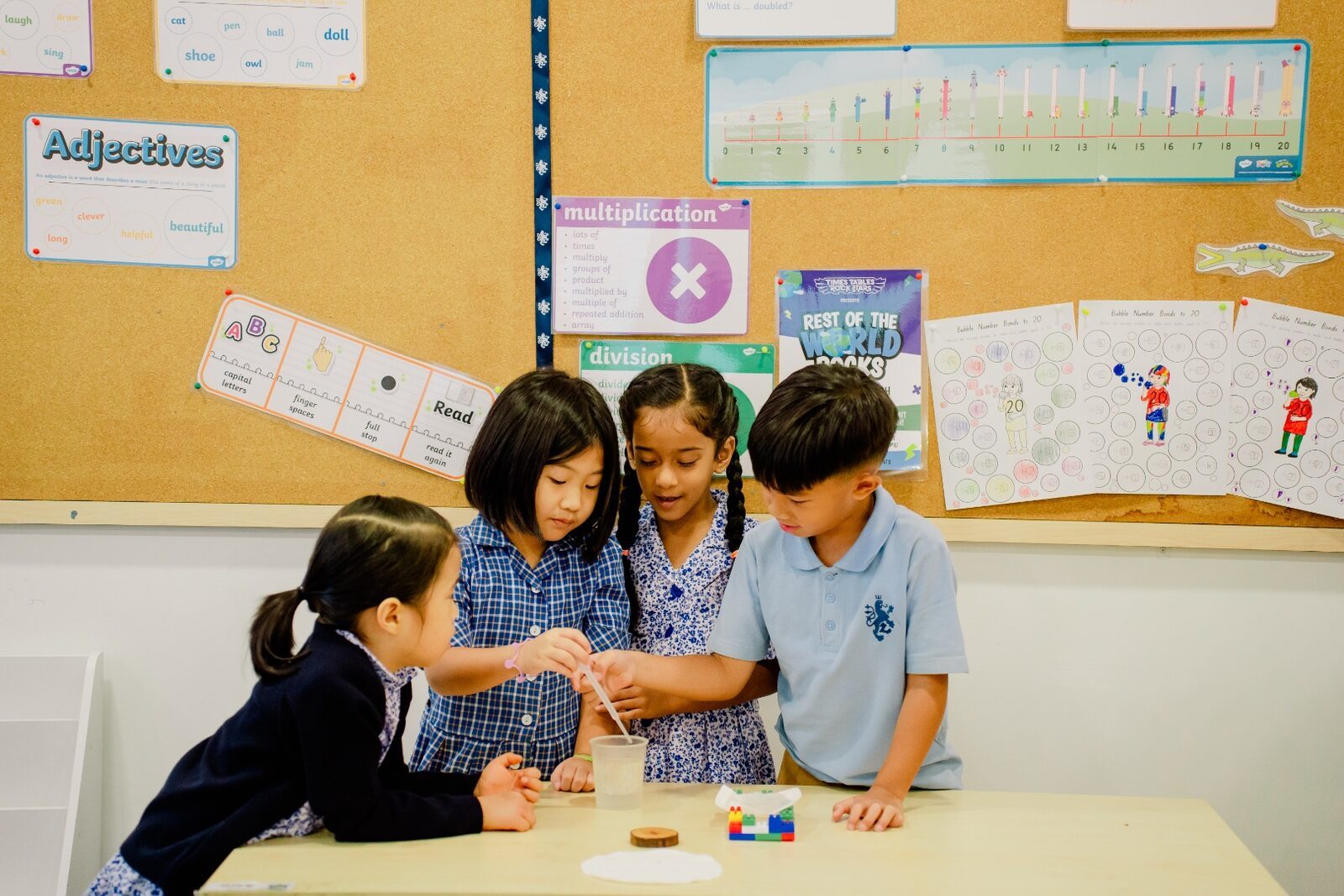
The independent Oracy Education Commission, in its 2024 report We Need to Talk, defined oracy as articulating ideas, developing understanding and engaging with others through speaking, listening and communication. That is broader than the school-play sense of the word. Oracy is not a child standing at the front giving a polished speech. It is the quality of talk that runs through an ordinary day: a group working out why a science experiment behaved as it did, a child disagreeing with a peer and giving a reason, a teacher asking a question that cannot be answered in one word.
The Commission described three overlapping strands. Children learn to talk, gaining the vocabulary and confidence to express themselves. They learn through talk, using discussion to work ideas out. And they learn about talk, noticing when to listen, how to build on what someone else has said, and how to disagree well. Reading and writing get years of dedicated attention. Speaking and listening, until recently, were assumed to look after themselves.
The evidence for classroom talk
They do not look after themselves, and the payoff for teaching them is large. The Education Endowment Foundation, which reviews the research behind classroom practice, rates oral language interventions as high impact for very low cost, on high-security evidence. On average these approaches add six months of progress over a year. Few things a school can do are both this effective and this cheap, because the raw material is already in the room.
What counts as an oral language intervention is undramatic: structured discussion, deliberate teaching of new vocabulary, tasks that require children to reason aloud before they write. Talk of this kind supports reading and writing directly, and there is growing evidence it lifts attainment in other subjects too. A child who can say why a character acted as they did will write it more clearly. A child who has argued through a maths problem out loud understands it more deeply than one who copied the method in silence.
Why oracy is on the agenda now
In November 2025 the government's independent Curriculum and Assessment Review published its final report and recommended introducing a national oracy framework to complement the existing frameworks for reading and writing. The government signalled its support. For a skill that has spent decades as an afterthought, that is a real shift, and it reflects two pressures. The first is equity. Children arrive at school with very different amounts of language behind them, and the gap tends to widen rather than close. The Commission found that most teachers, 53%, do not feel they have enough training to support pupils' speech and language in the classroom.
The second pressure is the shape of adult life. As routine written tasks are increasingly handled by software, the human skills of listening carefully, reasoning aloud, and persuading a room hold their value. There is a catch worth naming. Oracy is easy to reduce to a termly presentation, a performance staged for a mark. That misses the point. The gains come from the daily texture of talk in every lesson, not from an occasional turn at the microphone.
What builds it, at home and at school
Much of a child's spoken language is built at home, and long before school starts. The conditions are ordinary. Unhurried conversation, where a child is given time to finish a thought rather than have it completed for them. Being listened to properly, so that talk feels worth the effort. Hearing the adults around them reason out loud, weighing a decision or explaining why they changed their mind. Mealtimes and car journeys do more for oracy than any app, and reading aloud then talking about the story does more still.
Schools carry the rest. At ISJ, where children follow the English National Curriculum from the Early Years, talk is treated as something to be taught rather than assumed: questions that open discussion instead of closing it, structured ways to disagree, time to rehearse an idea in speech before committing it to paper. Spoken and written language grow together, each pulling the other along. Our companion piece on reading for pleasure looks at the other half of that partnership, and at the home routines that build readers.