
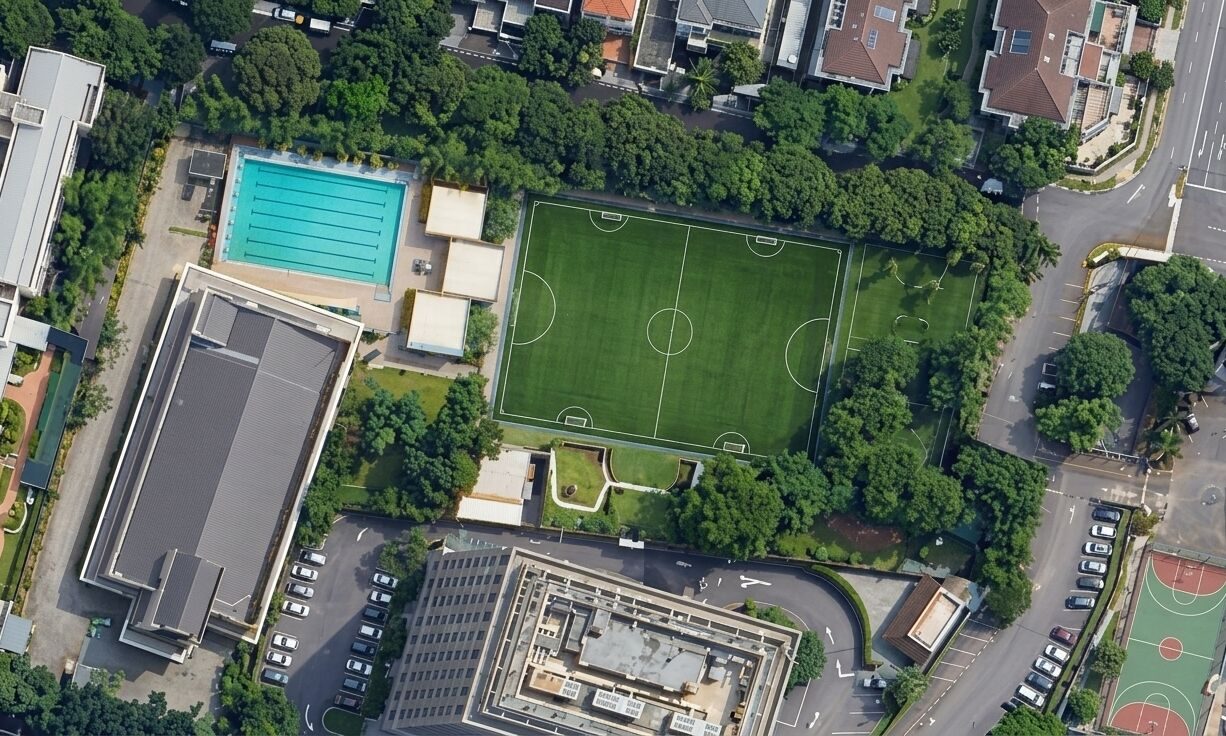
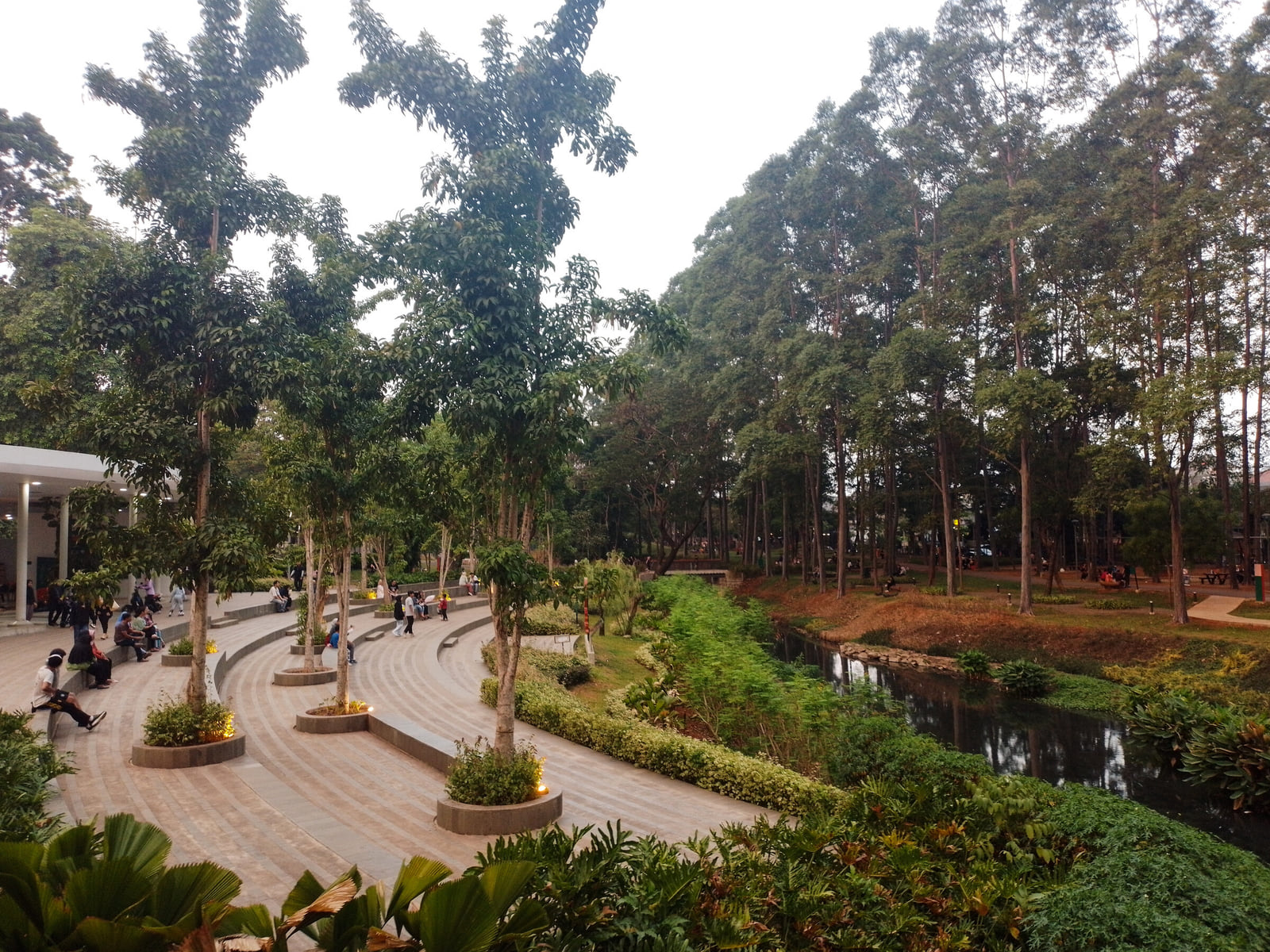
Most parents asking "is Jakarta safe?" are picturing the wrong risks. They worry about crime. The data does not support the worry. They under-worry about traffic and air, where the data is unambiguous. A wealthy Indonesian family in Pondok Indah and an expat family on a five-year posting to JIS or BSJ live in much the same city: gated street, car with a driver, air-conditioned house, international school. That envelope is what makes Jakarta one of the easiest large Asian capitals to live in well, and it is the lens this briefing uses throughout.
The honest version of the answer has three parts. Violent crime against foreigners is rare. Opportunistic crime exists but is straightforward to design around. The real hazards for an expat family are roads, air, flooding, and occasional civil unrest, in roughly that order.
The honest risk picture
The table below summarises what an expat family in South Jakarta should care about and how big each risk is, judged against day-to-day life rather than worst-case scenarios. The ordering is deliberate. Traffic and air pollution sit at the top because they affect every family, every day. Crime sits lower because, in this envelope, it rarely affects anyone.
| Risk | Severity for South Jakarta family life | What it means in practice |
|---|---|---|
| Road traffic | High | Indonesia's road fatality rate is roughly four to five times the UK or Singapore. Motorbikes carry most of the risk. |
| Air pollution (PM2.5) | High | Jakarta's annual PM2.5 sits at six to eight times the WHO guideline. Worst in the dry season (Jun to Sep). |
| Petty theft and scams | Moderate | Pickpocketing in markets, phone-snatches from open car windows, ATM skimming. Avoidable with normal precautions. |
| Flooding | Moderate (seasonal) | Kemang and parts of East Jakarta flood in heavy rain. Pondok Indah, Menteng and SCBD are largely spared. |
| Civil unrest and protests | Low to moderate | Concentrated in Central Jakarta around the DPR (parliament), Monas and Istana. South Jakarta residential streets are typically unaffected. |
| Violent crime against foreigners | Low | Rare. Kidnappings of expats are uncommon and almost always financially motivated by people known to the family. |
| Terrorism | Low (residual) | No major incident in years. Hotels, embassies and places of worship still appear in named advisories. |
| Natural disaster | Low (within Jakarta) | Earthquakes and volcanoes are an Indonesia issue more than a Jakarta one. |
Crime: low for violence, normal for opportunistic theft
Jakarta is materially safer-feeling than Manila or Kuala Lumpur and less safe-feeling than Singapore or Tokyo. Numbeo's crowdsourced crime index puts Jakarta in the middle of Southeast Asia's big cities, and police data on homicide and aggravated assault tells the same story. Violent crime against foreigners is uncommon. The handful of high-profile kidnapping cases in the past decade have almost always involved a financial motive and a perpetrator known to the victim's household. Random violence is not a feature of expat life here.
Opportunistic crime is a different story. Phones snatched through open car windows in slow traffic, motorbike-rider bag-grabs in Kemang and Senopati, pickpocketing at large markets such as Tanah Abang, and skimmed ATM cards at standalone street machines are all common enough to mention. None of these is unusual in any large Asian capital, and almost all are designed around with three habits: do not display phones at open windows in traffic, use ATMs inside bank branches and shopping malls, and keep wallets and bags out of easy reach in crowded markets.
Traffic is the single biggest risk
Indonesia's road fatality rate is one of the highest in Asia. The figures below are from the WHO Global Status Report on Road Safety and national police statistics. Motorbike riders and passengers account for around three-quarters of fatalities, which is why the most important safety decision a family makes in Jakarta is to use a car (preferably with a vetted driver or a Grab Car) rather than a motorbike taxi.
Indonesia records roughly 90 road deaths a day. Motorbikes are involved in around three-quarters of them.
Practical implications for a family settling into South Jakarta. Use a school bus or a vetted driver for the school run. Do not let teenagers take motorbike taxis (ojek). Insist on rear-seat seatbelts and properly fitted child seats; both are common in expat households and easy to overlook in an Indonesian-spec car. For weekend trips outside the city, drive in daylight and stick to toll roads.
Air pollution is the slow-burn risk
On a bad day in the dry season, Jakarta tops global live AQI rankings. On a normal day, the city sits in the same air-quality tier as Hanoi and Delhi rather than Singapore. IQAir's annual reports place Jakarta's average PM2.5 at roughly seven times the WHO guideline, and Vital Strategies' personal-exposure work in Jakarta found that schoolchildren on the school run can experience higher exposures than adults at home.
What expat families do about it. HEPA purifiers in bedrooms and the main living area as a baseline. Indoor PE on red-AQI days; most of the international schools (JIS, BSJ, NJIS, ACG, Lycée Français) publish AQI on their dashboards and have indoor-air protocols. N95 masks for kids on the school run when AQI is in the unhealthy range. Air-conditioning set to recirculate rather than fresh-air when driving through congested corridors. Asthma management plans should be sharpened on arrival, not relaxed.
Flooding is seasonal and very local
Jakarta's wet season runs October to March and peaks January to February. Major historical floods (2007, 2013, 2020) caused widespread disruption, but the elevation map matters more than the calendar. Pondok Indah, Menteng and the SCBD corridor sit on higher ground and drain well. Kemang sits low, near the Krukut and Pesanggrahan rivers, and reliably floods in heavy rain. Parts of East Jakarta and the coastal north flood more often and more severely. Families choosing housing in the wet season should ask landlords directly about flood history, and look at street level rather than house level.
The practical version of "flood preparedness" for a Pondok Indah family is light. Watch the BMKG (national meteorology) flood maps during heavy rain. Avoid driving through standing water of unknown depth. Keep a small store of bottled water and torches at home. For families in Kemang or lower-lying parts of Cipete, the same plus knowing which roads out of the area stay passable.
Civil unrest
The August to September 2025 protests were the largest civil unrest in Jakarta in years. They were sparked by anger over parliamentary allowances and intensified by the death of Affan Kurniawan, a Gojek driver killed by a police vehicle during the demonstrations. Coverage in international media made the city sound besieged. The reality on the ground was that the unrest was concentrated geographically: around the DPR (parliament), Monas and parts of Central Jakarta. South Jakarta residential life ran largely as normal, with schools open and shops trading.
The pattern matters. Jakarta's flashpoints sit in a small set of well-known locations: government buildings in Central Jakarta, embassies (especially US and Israel-linked posts during Middle East flare-ups), and a handful of major mosques and cathedrals on contested anniversaries. Avoid those locations on protest days, subscribe to the FCDO, Smartraveller and US Embassy alert feeds for early warning, and the practical risk to a family in Pondok Indah or Bintaro is low.
Where families live, and how it shapes risk
The single biggest determinant of a family's safety experience in Jakarta is not the city; it is the neighbourhood. The expat-family core sits in a corridor of South Jakarta neighbourhoods, plus a handful of suburban extensions to the south and west. The orientation block below is a simplified map of where families settle and what each area means for the risk profile.
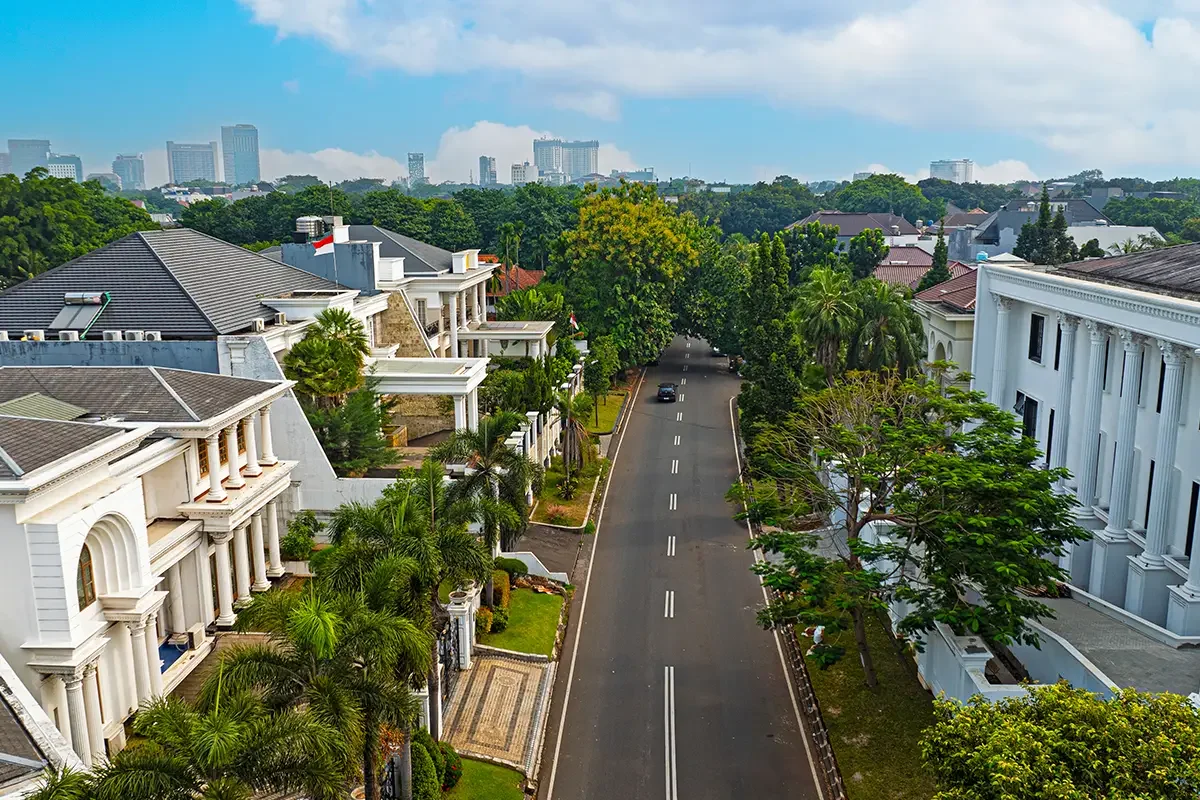
Pondok Indah is the most insulated address in the city. Gated, well-drained, treed, walking distance to JIS, Pondok Indah Hospital and Pondok Indah Mall. Kemang is livelier and more international but floods badly and has more night-time bag-snatch incidents around the strip. Cipete and Cilandak sit between the two. Senopati and SCBD work well for families in high-rise apartments who value security and concierge cover and accept smaller floorplates. Bintaro and BSD City offer space and quieter streets at the cost of a longer school run. The full trade-off across these areas is covered in the best neighbourhoods for expat families in Jakarta guide.
What expat families do
- Live behind a gate. A compound, a gated cluster or a serviced apartment with 24-hour security. This is the normal Jakarta baseline, not a paranoid choice.
- Car and driver, not motorbike. Direct-hire driver or Grab Car for the school run and the daily routine. Motorbike taxis (Gojek, GrabBike) are cheap but they are where the road fatality numbers live.
- HEPA filtration at home and at school. Bedrooms first, living area next. Most international schools publish AQI and run indoor-air protocols on bad days; ask to see the policy on a tour.
- Plan around the wet season. October to March. Ask landlords about flood history at street level. Build a small kit (torches, bottled water, power bank). Skip driving through standing water.
- Read the alerts, but read them lightly. Register with your embassy (UK BRP, US STEP, Australian OSSP). Treat the FCDO, Smartraveller and US Embassy alert feeds as RSS, not as panic triggers. Most Indonesia alerts concern Bali or volcanoes, not Jakarta.
- Cash discipline. Use ATMs inside bank branches or malls, not standalone street machines. Carry small notes for parking attendants and traffic situations. Avoid displaying phones at open car windows in slow traffic.
- Healthcare cover sorted before arrival. Pondok Indah Hospital, Mayapada and Siloam Asri handle most expat care in South Jakarta; international insurance and a clear evacuation policy matter more than any single hospital choice. The healthcare briefing covers the detail.
How Jakarta compares to its regional peers
Crowdsourced indices are imperfect, but the pattern they show is consistent with police statistics, expat surveys and traveller advisories. Jakarta sits in the middle of Southeast Asia's big cities on perceived crime, materially safer-feeling than Manila or Kuala Lumpur, less safe-feeling than Singapore or Tokyo.
When not to be relaxed
- Protest days at government buildings. Avoid the DPR, Monas and the Istana area on Fridays during periods of active unrest.
- Embassies during Middle East flare-ups. US, Israeli-linked, and at times French and UK posts have drawn demonstrations. Do not schedule visa appointments on flashpoint dates.
- Major mosques and cathedrals on contested anniversaries. Routine attendance is fine. Large public gatherings warrant a glance at the FCDO and US Embassy feeds first.
- Standalone ATMs in poorly lit areas. Use machines inside malls and bank lobbies.
- The school run in heavy rain. Standing water hides potholes, open drains and submerged kerbs. Wait it out where possible.
- Solo walking in Kemang after midnight. The strip is fine in the evening but thins out late. Use a car back to the compound.
The bottom line
Jakarta is not a dangerous city in the violent-crime sense, and the South Jakarta envelope most expat families live inside lowers the residual risk further. The two things that shape a family's safety here are roads and air. Families who treat those two as the binding constraints (car over motorbike, HEPA filtration as standard, wet-season planning, sensible alerts) report Jakarta as one of the easier large Asian postings. Families who try to live like they did in Singapore, walking everywhere, taking motorbike taxis, opening car windows in traffic, find it harder than it needs to be.
Sources and further reading
- WHO Global Status Report on Road Safety
- IQAir World Air Quality Report
- WHO Air Quality Guidelines (2021 update)
- Numbeo Crime in Jakarta
- UK FCDO travel advice for Indonesia
- US State Department travel advisory for Indonesia
- Smartraveller (Australia) Indonesia advice
- US Embassy Jakarta alerts
- TomTom Traffic Index, Jakarta
- BNPB (Indonesian National Disaster Management Agency)
- Vital Strategies (air quality and exposure research)