

Large-scale research across millions of students shows consistent patterns in what leads to stronger academic achievement. Certain factors appear repeatedly across age groups, subjects, and educational systems.
Teaching Quality Matters Most
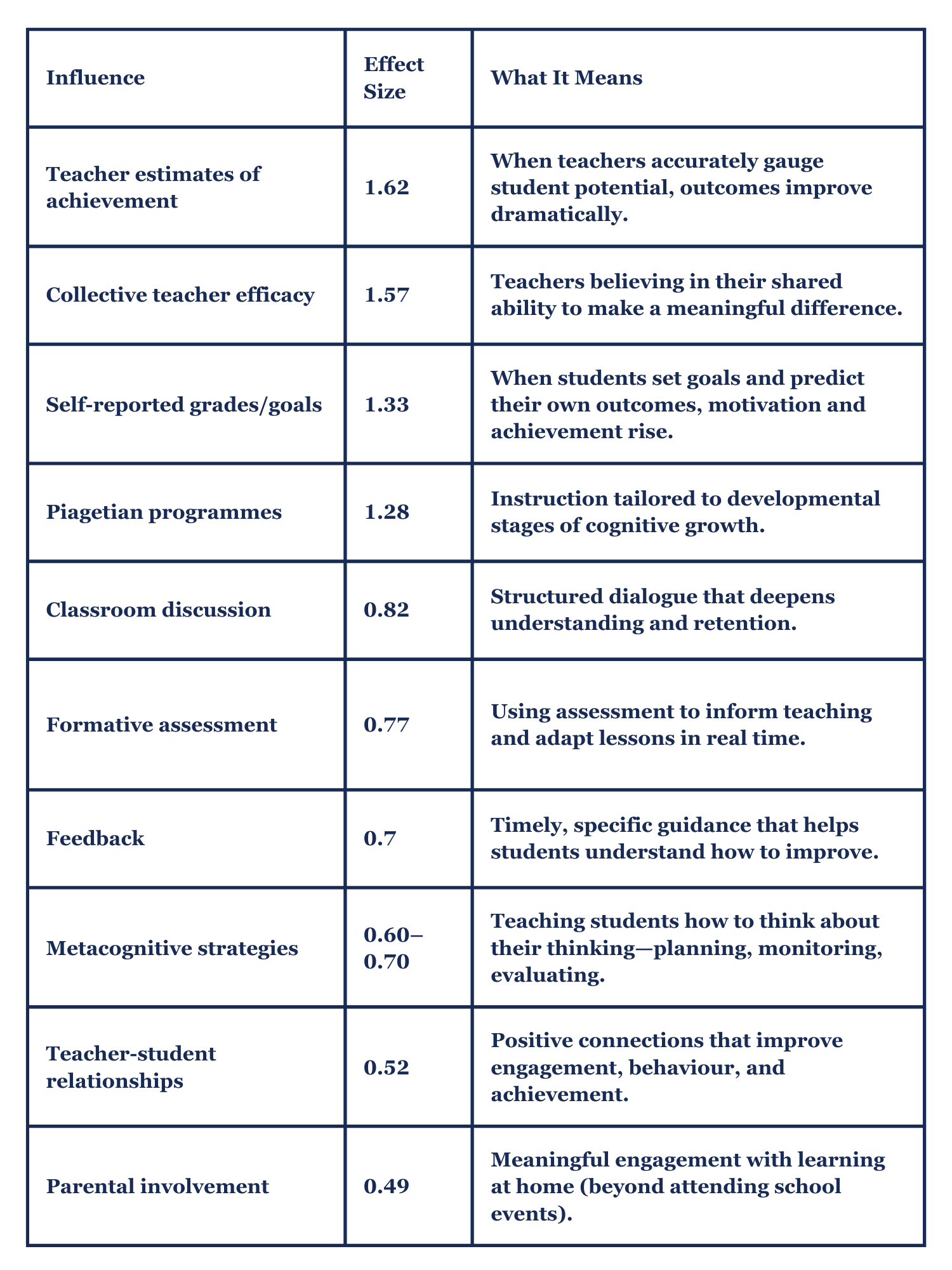
Curriculum matters. Resources matter. But the single most important school-based influence on a child's achievement is teaching quality: not just what teachers know about their subjects, but how skilfully they observe, adapt, explain, and connect with pupils.
The best schools prioritise professional development, collaborative planning, and reflective teaching practices, not as bureaucratic exercises, but because these approaches demonstrably improve outcomes.
The Invisible Toolkit
Three strategies consistently appear in the research as having outsized impact on learning. Feedback: clear, specific guidance about what is working and what to do next. Formative assessment: real-time checks for understanding that inform teaching decisions. And metacognition: helping pupils plan, monitor, and evaluate their own learning.
These strategies turn passive learners into pupils who understand not just what they are learning but how to learn.
Teacher Expectations
When a teacher believes a pupil can succeed, they invest more time, ask more challenging questions, and respond with greater patience. Pupils instinctively perceive these expectations, even when unspoken, and often rise to meet them.
This expectancy effect can operate invisibly, creating either virtuous or vicious cycles that significantly shape achievement over time.
School Culture and Relationships
In thriving learning environments, pupils feel safe, known, and supported. Positive behaviour is expected, and curiosity and kindness are modelled. Relationships remain consistent and predictable.
This emotional stability creates the secure foundation pupils need to take intellectual risks, persevere through challenges, and build confidence.
Teaching as an Expert Craft
Explaining concepts clearly is only part of it. Exceptional teachers read the room, detect confusion before a hand rises, adapt in real time, and pitch challenges between comfort and struggle. The craft develops through training, feedback, and years of refinement.
Presenting well at parent events is a different skill from running a focused, responsive classroom. Some of the most remarkable teachers are not the most outwardly charismatic. They are the ones whose pupils are deep in thinking, making connections, and finding satisfaction in learning, day after day.