
Jakarta is large, hot, and administratively unforgiving in the early weeks. The families who settle well are not the ones who researched everything in advance; they are the ones who got the essential infrastructure in place fast and accepted a six-week learning curve.
First Week: SIM Card and Official Registration
A local SIM card comes first. Telkomsel and XL offer the best coverage in Jakarta. Telkomsel (sold as Simpati or Kartu As) has the broadest network reach and is the safer default if you are unsure. A local number costs a few dollars and topping up is straightforward at any convenience store or via the Telkomsel app.
WhatsApp on a local number is how almost everything runs: school updates, household staff, landlords, clinics, service providers, and most social coordination.
Register your KITAS with Disdukcapil (the civil registration office) within 14 days of arrival. This is a legal requirement. You will also need to report to the local Babinsa. Your employer's HR team or a relocation agent can guide you through both steps. Missing the 14-day window can create complications that take weeks to resolve. Also register at your home country's embassy or consulate in the first week, as most have an online system and it matters if a consular situation arises.
Getting Around: Grab, Gojek, and Hiring a Driver
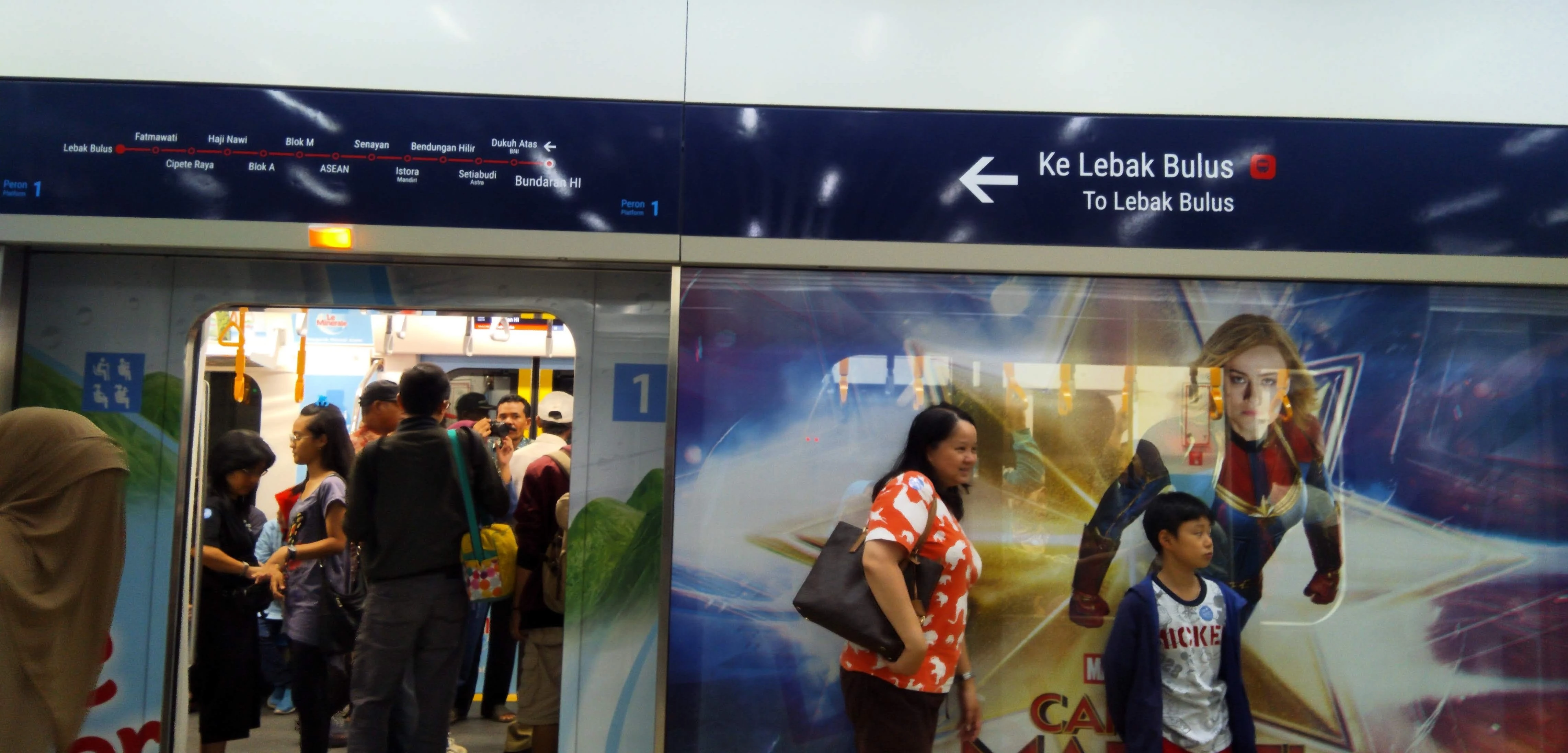
Grab and Gojek cover most transport and delivery needs in the early weeks: air-conditioned rides across the city, and food and grocery delivery from most restaurants and stores. Public transport rarely works for school runs; the MRT and Transjakarta network are not built around the South Jakarta school corridors. The realistic options are a dedicated driver or Grab.
Many expat families hire a full-time driver, typically at 4,000,000 to 5,500,000 IDR per month including a transport allowance. The benefit is consistency: the same person, on time, who knows the school and the traffic patterns. Finding a driver through the school gate network is more reliable than an agency. Ask for references and verify their SIM A driving licence.
Banking: What to Set Up and Where
Open a local bank account in the first two weeks. BCA (Bank Central Asia) and Mandiri are the main banks used by expats, both with English-language services at larger branches. HSBC and Standard Chartered have expat-focused branches in Jakarta if you need to manage money across currencies. You will usually need your KITAS card, passport, proof of address, and an initial deposit to open an account. Your employer can help you obtain an NPWP tax registration number if the branch requests one.
Clarify with HR whether your salary will be paid in IDR or your home currency before arrival. Most international schools in Jakarta accept bank transfer only, with fees payable termly or annually in advance. Plan for a significant initial outlay in the first month.
Healthcare
Register with an international clinic or hospital in your first week. MRCCC Siloam in Semanggi, RSPI (Rumah Sakit Pusat Internasional) in Pondok Indah, and Pondok Indah Hospital are the three facilities most commonly used by expat families in South Jakarta. All have English-speaking staff and are accustomed to dealing with international health insurance directly.
Most expat packages include international health insurance, but confirm the effective date with HR before departure. Families use the IQAir app to check air quality and keep children indoors on bad days; most schools and homes in South Jakarta have air filtration. See the healthcare briefing for expats in Jakarta for a fuller breakdown of hospitals, insurance, and emergency contacts.
Household Staff
Most expat families in Jakarta employ a household assistant (pembantu) and many also hire a driver. A live-in pembantu costs $200 to $400 per month depending on experience and whether accommodation is included. A day helper costs less. The arrangement is common and makes a practical difference in a city where household errands are time-consuming.
The most reliable way to find staff is through personal recommendations at the school gate or expat community WhatsApp groups. Staffing agencies exist but vary in quality. Always ask for a reference from the most recent employer, verify their KTP (national ID card), and agree on hours, duties, and overtime in writing from the start.
Enrol household staff in BPJS (Indonesia's national social insurance scheme) from the beginning of employment. This is a legal requirement for employers, including expat families. BPJS covers employment injury, health, and retirement contributions. Failing to register creates legal exposure.

Schools and the School Gate Network
Register children for school as early as possible. School places at international schools in South Jakarta, particularly in popular year groups, are competitive. Mid-year entry is possible at most schools, but waiting lists are real, especially at the primary level. If your preferred school cannot confirm a place before you arrive, have a second option confirmed rather than landing without a school.
ISJ handles admissions enquiries directly and can advise on availability before you commit to a neighbourhood. The school gate is also the fastest way to build a social network in Jakarta. The established parent community is often the best source of local knowledge: which clinics speak good English, which drivers are dependable, which compounds have reliable internet.
Language and Realistic Expectations
Bahasa Indonesia is phonetically consistent, so pronunciation comes quickly. Most household staff and market vendors speak limited English, and even a small vocabulary changes those daily interactions from day one.
Jakarta is overwhelming for most new arrivals in the first four to six weeks. The traffic, heat, bureaucracy, noise, and language gap land all at once. Setting realistic expectations about this period is not defeatist. It is accurate. The families who manage it best are usually those who accepted the difficulty upfront rather than expecting the city to feel manageable quickly.
Most families find their feet by month three. By then the school run is routine, the household is functioning, the preferred grocery store is known, and the social network has started to form. The city rewards patience, and the practical infrastructure built in the first few weeks, sim card, bank account, clinic registration, household staff, school place, is what makes the longer settlement possible. Get those pieces in place first, and the rest follows.